Tree Stump Removal Near Me: What Property Owners in Montrose need to know
TL;DR
- Tree stumps are more than an eyesore. They can create trip hazards, mowing obstacles, pest issues, weed pockets, and wasted yard space.
- Stump grinding is usually the most practical option for homes and managed properties because it removes the visible stump below grade with less disruption.
- Full stump removal may be better when you need to build, regrade, install hardscaping, or remove a larger root system.
- The best stump removal plan considers access, stump size, root spread, irrigation lines, nearby structures, and what you want to do with the area afterward.
- After removal, the area should be cleaned, backfilled, leveled, and prepared for grass, mulch, rock, or new landscaping.
- If you manage a property, stump removal can reduce liability, improve curb appeal, and make lawn care and seasonal maintenance easier.
If you are searching for tree stump removal near me in Montrose, Delta, or Ridgeway, you are probably dealing with an old stump that is in the way, attracting pests, creating a mowing hazard, or making your landscape look unfinished. Tree stump removal is more than cleaning up after a tree comes down. It is a practical property maintenance and property improvement service that can improve curb appeal, reduce trip hazards, open up usable yard space, and make future landscaping, lawn care, irrigation, or hardscaping work easier to complete.
“A stump left in the wrong place turns into a long-term maintenance problem. Removing it correctly gives you a clean surface to repair, replant, or redesign.”
Why tree stump removal matters
A tree stump may not seem urgent at first. After all, the tree is already gone. But the stump often becomes the part of the project that causes the most long-term irritation.
You have to mow around it. Weeds grow around it. It interrupts clean bed lines. It can attract insects as it decays. It can also create a trip hazard, especially in lawns, common areas, entry zones, and commercial landscapes.
For homeowners, a stump can make an otherwise clean yard feel unfinished. For property managers, it can create maintenance inefficiency and liability concerns. If the stump sits near a walkway, driveway, parking area, or shared outdoor space, it is worth addressing sooner rather than later.
Tree stump removal vs stump grinding
Before you schedule service, it helps to understand the difference between stump removal and stump grinding.
What stump grinding does
Stump grinding removes the visible stump by grinding it down below the soil surface. The deeper roots are usually left in place to decay over time. This is often the preferred method for residential and commercial properties because it is efficient, less invasive, and usually causes less disturbance to the surrounding lawn or landscape.
Stump grinding is a good choice when your goal is to make the area level, easier to mow, safer to walk across, and ready for grass, mulch, decorative rock, or a new planting bed.
What full stump removal does
Full stump removal means removing more of the stump and root ball. This can require more digging, heavier equipment, and more restoration afterward. It creates more ground disturbance, but it may be necessary when roots interfere with construction, grading, hardscaping, or a major property improvement project.
If you are planning a patio, walkway, retaining wall, parking area, or full landscape redesign, full removal may be worth considering. Alpine Property Services often recommends looking at the next step before choosing the removal method. If you only want a smoother lawn, grinding may be enough. If you want to build over the area, the root system matters more.
Signs you need tree stump removal services
Some stumps can sit out of the way for a while without much trouble. Others should be handled quickly. The difference usually comes down to location, safety, and how the area is used.
The stump is in a high-traffic area
If the stump is near a walkway, driveway, lawn path, play area, rental common space, or commercial frontage, it creates a hazard. People may not see it in tall grass, snow, or low light. That makes it a bigger concern for property managers and business owners.
The stump is making lawn care harder
Stumps interrupt mowing patterns and force extra trimming. They also increase the risk of equipment damage if a mower catches the edge. Over time, grass around the stump often becomes uneven or weedy because it is harder to maintain cleanly.
If you are already investing in lawn care and landscaping, removing the stump can make regular service more efficient and improve the finished look of the yard.
The stump is attracting pests
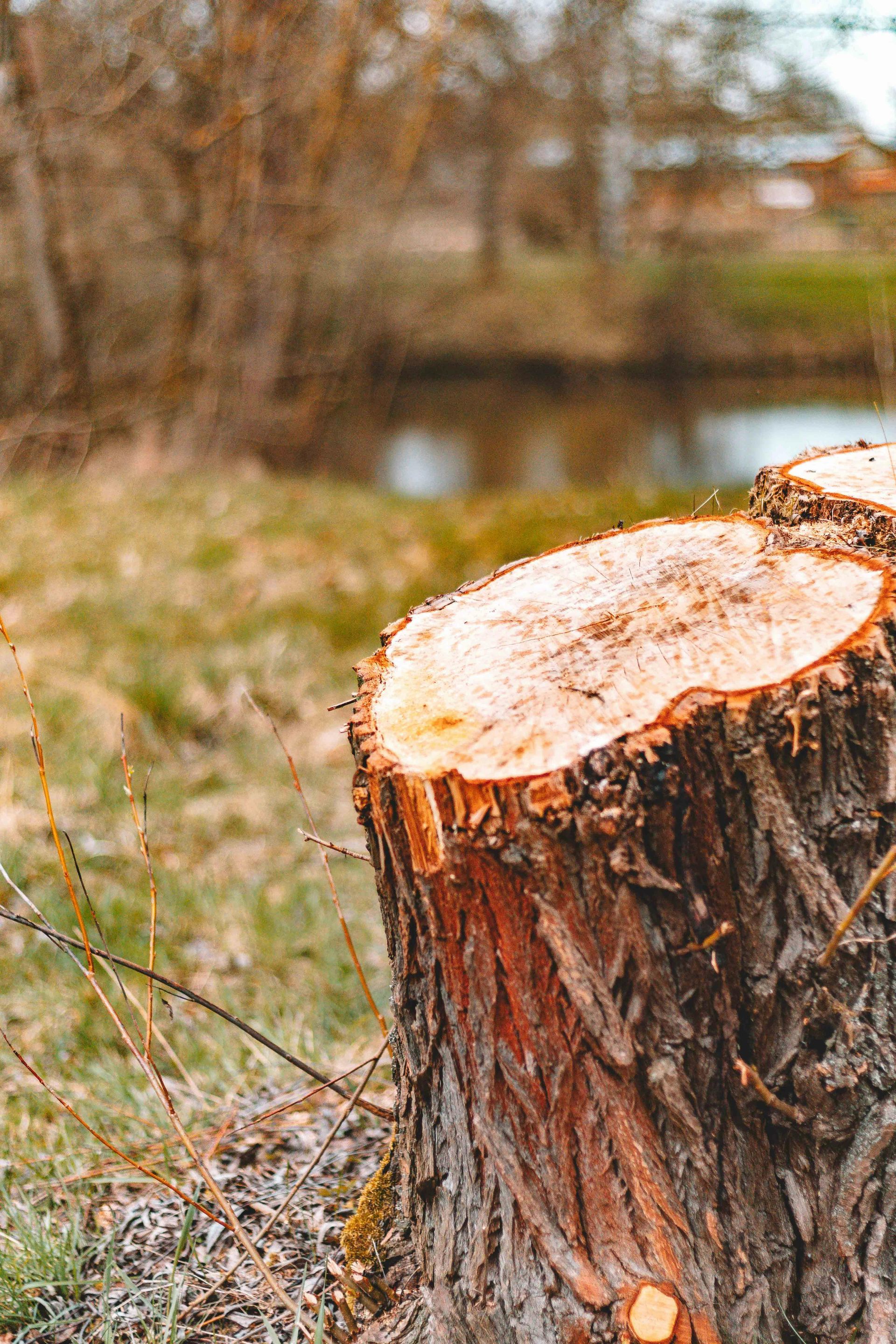
Decaying wood can attract ants, beetles, termites, and other pests. Not every stump becomes a major pest issue, but old wood near a home, rental, office, or landscaped entry should not be ignored. Removing it reduces the decaying material that pests can use.
The stump hurts curb appeal
A leftover stump can make a property look like a project was never finished. This matters for homeowners, rentals, commercial sites, and properties being prepared for sale. A clean, level area looks intentional. A stump usually looks neglected.
What to expect from the stump removal process
A good stump removal process starts with a site review, not just a machine showing up and grinding.
Site assessment
The first step is looking at the stump and the surrounding area. Important factors include stump size, height, tree species, root flare, access, nearby fences, irrigation, utilities, patios, driveways, and landscaping features.
Access matters. A stump in an open front yard is different from a stump behind a narrow gate or next to a retaining wall. A professional should also consider what you want to do with the space afterward.
Choosing the right method
For most properties, stump grinding is the best fit. It removes the problem quickly and prepares the area for repair. Full stump removal may be recommended if the root system is interfering with a planned improvement.
Manual removal may work for very small stumps, but larger stumps require equipment. Chemical stump removal is slow and usually not the best choice when you want a clean professional result.
Grinding or removal
During stump grinding, the stump is ground below the surface. The exact depth depends on the future use of the area. If you are reseeding grass, shallow grinding may not be enough. If you are planting or installing landscape material, deeper grinding and better cleanup may be needed.
Cleanup and backfill
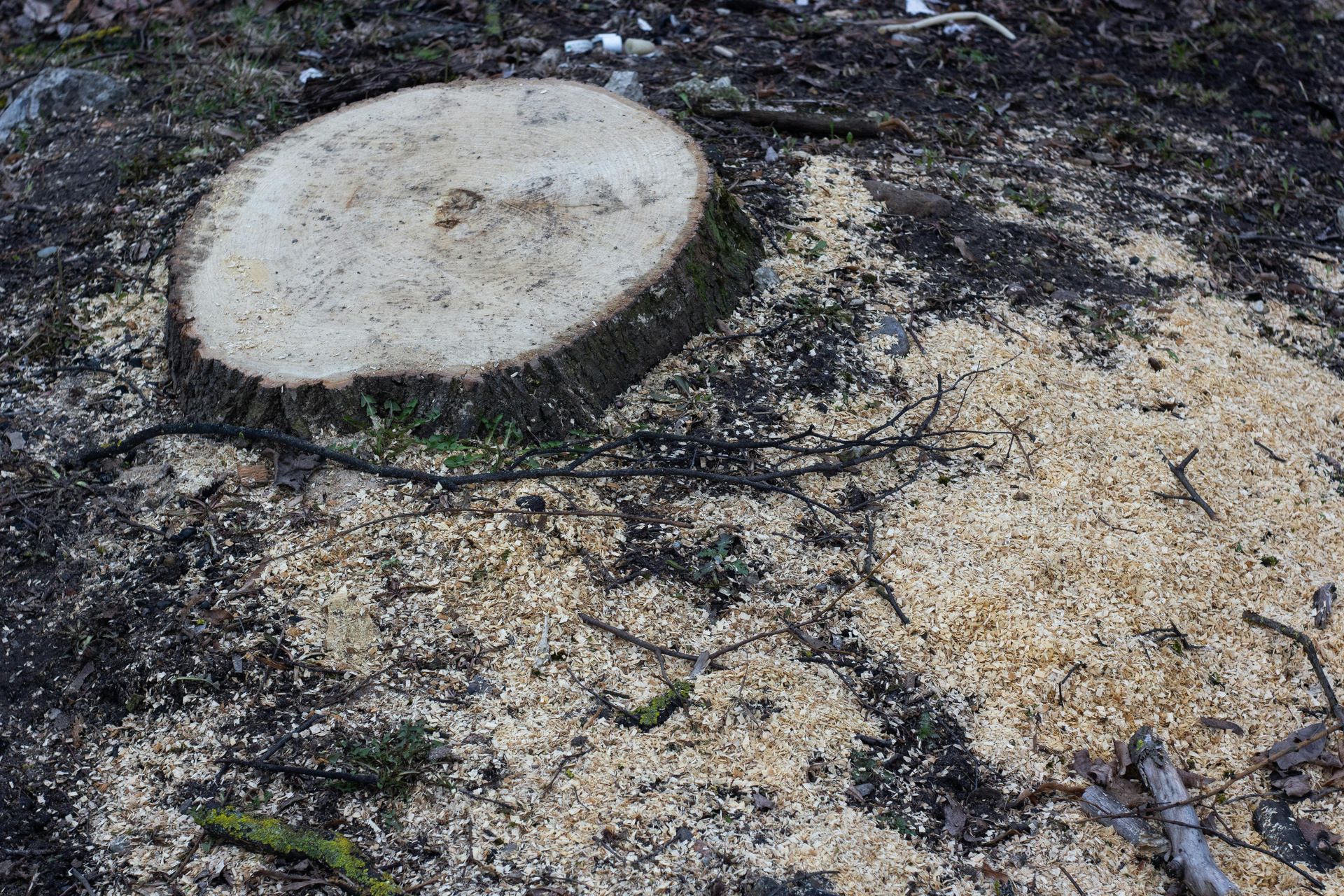
After grinding, you are left with wood chips and a depression in the ground. Some people want chips left on site. Others want them hauled away. If the area is going back to lawn, too many chips can interfere with soil quality and grass establishment. In that case, the area should be cleaned out, backfilled with soil, leveled, and prepared properly.
What happens after stump removal
The best results come from planning the repair before the stump is removed.
Replanting grass
If you want lawn where the stump used to be, the area needs proper soil and water. Usually, that means removing excess chips, adding topsoil, leveling the area, and then using seed or sod. You may also need to adjust nearby irrigation so the repaired area gets enough water without overwatering the rest of the lawn.
If irrigation coverage is already uneven, this is a good time to evaluate it. Alpine offers irrigation services that can help correct dry spots, broken heads, overspray, and coverage issues that affect lawn repair.
Turning the area into a landscape bed
Sometimes replacing the stump area with turf is not the best choice. If the stump was in a hard-to-mow corner, shaded area, slope, or strip that struggles every year, you may be better off converting it into a mulch bed, decorative rock bed, or low-maintenance planting area.
This is where stump removal becomes a property improvement project. You are not just removing a problem. You are turning the area into something easier to maintain.
Preparing for hardscaping or outdoor features
If the stump is in a future patio, walkway, seating area, or water feature zone, it should be handled before the build begins. Alpine’s patios and water features services can benefit from a cleaner site where stumps, roots, grading issues, and access concerns are handled early.
Benefits of removing a tree stump
Tree stump removal gives you both immediate and long-term benefits.
Better curb appeal
A stump pulls attention for the wrong reason. Removing it makes the lawn or landscape look cleaner and more complete. This is especially important near front yards,
entryways, storefronts, and rental common areas.
Safer property conditions
Stumps can be easy to miss, especially in grass, leaves, or snow. Removing them reduces trip hazards and makes the site safer for kids, guests, tenants, customers, and maintenance crews.
Easier mowing and yard care
A stump forces extra trimming and complicates mowing. Once it is gone, lawn care becomes cleaner and more efficient. You get smoother mowing patterns, fewer weed pockets, and fewer obstacles around the property.
More usable space
A stump occupies space you could use for lawn, plants, rock, mulch, seating, or a hardscape feature. Removing it gives you options.
Stump removal for homeowners
If you own a home, stump removal is one of the simplest ways to clean up your yard without taking on a full landscape renovation.
You might remove a stump because you are tired of mowing around it, preparing to sell, cleaning up after storm damage, or planning a new bed. You may also remove it because the tree was taken down years ago and the stump has become an eyesore.
For many homeowners, the biggest benefit is that the yard finally feels finished. The stump is gone, the area is level, and the landscape can be repaired or redesigned.
Stump removal for property managers and commercial sites
For property managers, stump removal is about risk, efficiency, and presentation.
A stump in a shared lawn or commercial frontage area creates a maintenance obstacle. It can also lead to tenant complaints, safety concerns, and inconsistent curb appeal. If your crews have to trim around the same stump every visit, you are paying for inefficiency.
Common commercial stump removal areas include apartment common spaces, office landscapes, retail frontage, parking lot islands, sidewalk edges, and HOA green areas. In these settings, removing the stump helps the property look more professional and keeps maintenance simpler.
Stump removal also pairs well with other exterior services, including asphalt maintenance when the stump or roots are near driveways, parking areas, or paved edges.
Cost factors for tree stump removal near me
Stump removal pricing depends on the specific site. The most common cost factors include stump diameter, stump height, wood hardness, root spread, access, nearby obstacles, and cleanup requirements.
A stump in a wide open area is usually simpler than one behind a fence or next to a structure. A small softwood stump is usually easier than a large hardwood stump with surface roots. If you want chips hauled away, soil added, and the area repaired, that affects the final scope.
The best estimate should explain what is included. Ask whether the quote includes grinding depth, surface root handling, cleanup, haul-away, backfill, and finish grading.
DIY stump removal vs hiring a professional
Small stumps can sometimes be handled by a homeowner with the right tools and patience. But many stump projects become frustrating or unsafe.
Common DIY mistakes
People often try to pull stumps with vehicles, dig without knowing where irrigation lines are, cut the stump too high, leave a large hole, or use chemicals that take too long to matter. Another common mistake is leaving too many wood chips in the soil and then wondering why grass will not establish well.
When professional removal makes more sense
Professional help is usually the better option when the stump is large, close to structures, located near irrigation, in a visible area, or part of a bigger property improvement plan. You get faster work, better equipment, and a cleaner finish.
Safety concerns before stump removal
Before any removal work begins, you should think about what is around the stump.
Irrigation and utilities
Sprinkler lines, low-voltage lighting, drainage pipes, and utility lines can all be near the stump. If you are unsure, the area should be checked before equipment work starts. Damaging irrigation can create a bigger problem than the stump itself.
Structures and hardscapes
Fences, patios, sidewalks, driveways, retaining walls, and landscape borders all affect how removal should be approached. Good planning protects the surrounding property.
Work zone safety
Stump grinding can produce flying debris, noise, and uneven ground. Kids, pets, tenants, and customers should be kept away from the work area until cleanup is complete.
How stump removal connects to full property maintenance
Stump removal is not an isolated service. It connects directly to the condition and usability of the whole property.
It improves landscaping because bed lines can be cleaner and plant placement becomes easier. It improves lawn care because mowing and trimming become simpler. It supports irrigation work because sprinkler coverage can be corrected after the obstruction is gone.
It supports seasonal cleanup because leaves, twigs, and debris no longer collect around the stump. It can even support winter access because low obstacles are harder to see once snow covers the ground, which is one reason to coordinate exterior hazards before snow removal season.
If you are already planning a cleanup or property improvement project, stump removal is often one of the first things to handle.
Questions to ask before hiring a stump removal company
Before hiring, ask clear questions so you know what you are getting.
Ask whether they recommend grinding or full removal and why. Ask how deep the stump will be ground. Ask whether cleanup is included. Ask if chips will be left, hauled away, or used on site. Ask whether the area will be backfilled and leveled.
Ask how they handle nearby irrigation, utilities, and structures. Ask whether they can help repair the area afterward with lawn repair, rock, mulch, or landscape upgrades.
Clear answers help you avoid paying for a partial job when you really need a finished result.
Conclusion
If you are searching for tree stump removal near me in Montrose, Delta, or Ridgeway, the best choice starts with understanding what the stump is affecting. Is it a safety issue, a mowing problem, a pest concern, a curb appeal problem, or an obstacle to future landscaping? Once you know the goal, you can decide whether stump grinding or full removal makes the most sense.
Removing a stump gives you a cleaner, safer, more usable property. It also sets the stage for better lawn care, smoother maintenance, and smarter property improvements. If you want the area repaired correctly afterward, start with a site assessment and build the removal plan around what you want the space to become next.
To schedule a property assessment or ask about stump removal, landscaping, irrigation, seasonal cleanup, or related exterior services, contact Alpine Property Services through the Contact page or use the Request a Call Back form.
Recent Posts