Patio Installation | Paver Patio Installation why we Recommend Pavers
TLDR: Common Patio Paver Questions
- Are pavers better than concrete for patios? Pavers are often the better choice when you want design flexibility, easier section repairs, custom patterns, and a patio that connects naturally to walkways, landscaping, decks, and water features.
- Do paver patios last a long time? Yes. A properly installed paver patio can last for many years when the base is excavated correctly, compacted well, sloped for drainage, and held in place with proper edge restraint.
- Do patio pavers require maintenance? Yes, but the maintenance is usually manageable. You should expect occasional sweeping, rinsing, weed control, joint sand touch-ups, and inspection for settling or movement.
- Can patio pavers handle Colorado weather? Pavers can perform well in Colorado when installed with freeze-thaw conditions, snow melt, irrigation runoff, and soil movement in mind.
- Are pavers good around fire pits and water features? Yes. Pavers work well around fire pits, pondless waterfalls, garden waterfalls, patios, and outdoor seating areas when splash, heat, drainage, and access are planned correctly.
- Why do paver patios fail? Most failures come from poor base preparation, weak compaction, bad drainage, missing edge restraint, or ignoring how water moves across the property.
- Is a paver patio good for rentals or commercial properties? Yes, especially when the design is simple, durable, easy to maintain, and planned around foot traffic, irrigation, snow removal, and long-term property care.
- What should you ask before hiring a paver patio contractor? Ask about base depth, drainage, edge restraint, compaction, joint sand, irrigation protection, cleanup, and how the patio will connect to the rest of the landscape.
Helpful Alpine Property Services resources: Patios and Water Features, Landscaping, Irrigation, and Contact Alpine Property Services for professional help with your project.
Paver Patio Installation: Why We Recommend Pavers for Patios
If you are considering Paver Patio Installation for a home, rental property, commercial site, or outdoor living space in Montrose, Delta, or Olathe, pavers are one of the most practical and attractive patio options available. A well-built paver patio can create a better place to relax, dine, entertain, connect a deck to the yard, frame a garden waterfall, or replace a muddy lawn area with a durable finished surface.
Before you choose patio materials, it helps to understand why many property improvement professionals recommend pavers, how they compare to concrete and natural stone, and what you should know about base preparation, drainage, irrigation, maintenance, and long-term performance. A patio is not just a surface. It is part of the way your whole property functions.
“The value of a paver patio is not just in the paver itself. It is in the base, drainage, edge restraint, and how well the patio fits into the surrounding landscape.”
Alpine Property Services expert insight
Why Paver Patio Installation Is Worth Considering
A paver patio can turn an underused outdoor area into a finished space that feels intentional. Instead of walking across worn grass, muddy soil, or an awkward side yard, you can create a defined area for seating, dining, grilling, fire features, or everyday use.
For homeowners, a paver patio can make the backyard more comfortable and usable.
For property managers, it can create a cleaner common area, improve tenant experience, and reduce recurring turf damage. For commercial properties, it can support outdoor seating, entry presentation, and better traffic flow.
The biggest advantage is that pavers work well with the rest of the property. They can connect to walkways, lawn areas, planting beds, decks, water features, and outdoor gathering zones. When planned correctly, they help the landscape feel organized instead of pieced together.
Alpine Property Services has seen plenty of outdoor spaces where a patio was needed not because the owner wanted something flashy, but because the yard had a repeated problem. A back door opened into a muddy area. A side yard never held grass. A deck stairway landed in a worn patch of lawn. In those situations, pavers can solve a practical problem while improving the look of the property.
Why We Recommend Pavers for Patio Installation
Pavers are not the only patio material, but they offer a strong combination of durability, design flexibility, and repairability.
Pavers Can Be Repaired in Sections
One of the main reasons pavers are often recommended is that individual units can be lifted, adjusted, or replaced. If a small area settles or a paver becomes damaged, the repair may be more localized than it would be with a poured concrete slab.
That does not mean paver patios are immune to problems. Poor installation can still cause movement, uneven surfaces, or drainage issues. But when the base and edge restraint are done correctly, pavers give you a patio surface that can be maintained and corrected over time.
Pavers Handle Minor Movement Better Than a Single Slab
Colorado properties can experience soil movement, freeze-thaw cycles, snow melt, irrigation runoff, and seasonal moisture changes. A single rigid slab can crack when the base shifts or water is not managed properly.
Pavers are individual units, so they can often tolerate minor movement better than one continuous surface. This flexibility is one reason they are useful for patios, walkways, fire pit areas, and deck landings.
The key is installation. Pavers only perform as well as the preparation beneath them.
Pavers Create a More Custom Look
Pavers give you choices in color, size, shape, pattern, texture, and border design. You can create a simple rectangular patio, a curved seating area, a fire pit circle, a walkway connection, or a patio that wraps around a water feature.
Borders can define the patio edge. Pattern changes can separate dining and seating zones. Contrasting colors can help the space feel more finished.
This level of design flexibility makes pavers especially useful when the patio needs to connect with landscaping, outdoor living features, or an existing home style.
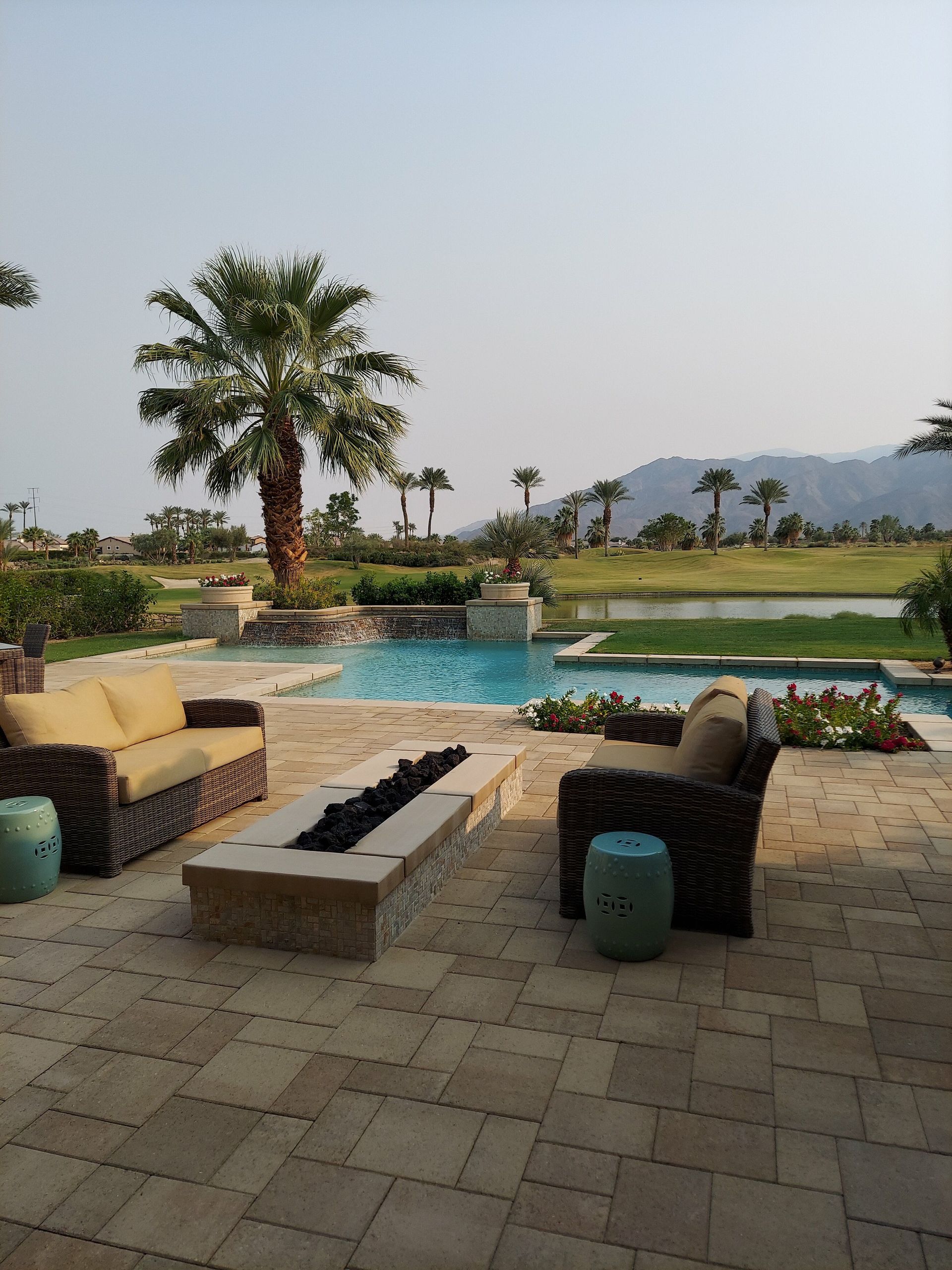
Paver Patios vs Concrete Patios
Concrete can be a good patio material in the right situation. It can create a clean, simple surface and may be practical for larger, straightforward areas. But when you compare pavers and concrete for outdoor living spaces, pavers often provide more flexibility.
Appearance
A basic concrete patio can look clean, but it may feel plain unless it is stamped, colored, or finished with additional design detail. Pavers naturally offer more texture and pattern. They can make a patio feel more custom without needing the entire surface to be decorative concrete.
For properties in Montrose, Delta, and Olathe where the patio connects to gardens, stone, gravel, lawn, or water features, pavers often blend more naturally into the landscape.
Repair Options
Concrete repairs can be noticeable, especially when the color, texture, or finish is difficult to match. A cracked slab may require patching, resurfacing, or replacement depending on the issue.
With pavers, individual sections can often be addressed more cleanly. If a small area settles, the affected pavers may be lifted, the base corrected, and the pavers reset.
Long-Term Value
Pavers may cost more upfront than basic concrete in some cases, but the added value often comes from customization, repairability, and design quality. The right choice depends on the property, budget, intended use, and maintenance expectations.
Paver Patios vs Natural Stone Patios
Natural stone patios can be beautiful. Flagstone and other stone materials can create a rustic, organic, high-end look. For some properties, especially those with natural gardens or mountain-style landscapes, stone may be the right choice.
Pavers, however, offer more consistency. They are manufactured in predictable sizes and thicknesses, which can make layout, furniture placement, edge control, and installation more straightforward.
If you want a smoother patio for dining furniture, outdoor seating, or high-traffic use, pavers may be easier to work with than irregular natural stone. If you want a highly natural look, stone may be worth considering. Many properties can also benefit from mixed-material designs that use pavers for the main surface and natural boulders, rock beds, or planting areas for texture.
Common Paver Patio Styles
Classic Rectangular Paver Patio
A rectangular patio is practical, clean, and easy to furnish. It works well for outdoor dining, grill areas, rental properties, and commercial common areas. The shape makes it easier to place tables, chairs, planters, and walkways without wasted space.
This style is especially useful when you want a simple patio that feels organized and easy to maintain.
Curved Paver Patio
A curved paver patio works well when the surrounding landscape has garden beds, lawn curves, walkways, or water features. Curves can make a space feel softer and more natural.
Curved patios require careful edge restraint and layout planning, but the finished result can feel more custom than a simple square or rectangle.
Fire Pit Paver Patio
A paver fire pit patio can create a dedicated gathering space. Circular or semi-circular layouts work especially well because they support natural seating arrangements.
Before building, consider furniture spacing, safe circulation, wind direction, nearby plants, and how people will move between the house, patio, and yard.
Paver Patio With a Water Feature
Pavers work well around pondless waterfalls, garden waterfalls, fountains, and small water features. They can create a clean seating surface while the water feature adds sound, movement, and visual interest.
The design should account for splash, drainage, pump access, electrical needs, and safe walking areas. A water feature should not be added as an afterthought once the patio is already built. It should be part of the layout from the beginning.
Deck-to-Patio Transition
If you have a deck, pavers can create a clean landing at the bottom of the stairs. This helps prevent muddy stair landings, worn grass, and awkward lawn transitions.
A paver landing can also connect the deck to a larger patio, walkway, fire pit, garden, or outdoor seating area. This is one of the best ways to make an elevated deck feel connected to the rest of the yard.
What to Know Before Installing a Paver Patio
The surface you see is only part of the project. The real performance comes from what happens beneath the pavers.
Base Preparation Determines Long-Term Performance
A paver patio needs proper excavation, base material, compaction, bedding material, and leveling. If the base is weak, uneven, or poorly compacted, the patio may settle, shift, or become uneven.
This is where many patio problems begin. The pavers themselves may be good quality, but poor preparation underneath can still lead to failure.
Drainage Must Be Planned Before Installation
Water should move away from the home, patio, and foundation. It should not collect along the patio edge or wash out the base material.
Before installation, you should think about roof runoff, downspouts, irrigation overspray, snow melt, slope, and low spots. If water is already pooling in the area, installing a patio without fixing drainage may only hide the problem temporarily.
Edge Restraint Matters
Edge restraint helps hold the pavers in place. Without strong edges, the patio can spread, shift, or lose its shape over time.
This is especially important where pavers meet lawn, mulch, gravel, planting beds, or walkways. A clean edge improves both performance and appearance.
Irrigation and Utilities Need to Be Identified
Before excavation, sprinkler lines, heads, lighting wires, gas lines, and other utilities should be located and protected. Irrigation may also need adjustment after the patio is installed so sprinklers are not watering the paver surface or missing nearby turf.
This matters because a patio changes how the surrounding landscape works. It can block old spray patterns, alter runoff, and change access for maintenance.
Paver Patio Ideas for Homeowners
A backyard dining patio can give you a comfortable place for meals, grilling, and family gatherings. A small paver patio can turn an unused corner into a sitting area. A garden patio can create a quiet retreat near flowers, ornamental grasses, or a water feature.
You can also use pavers to replace a high-maintenance turf area. If part of your lawn is constantly muddy, difficult to mow, or worn down by traffic, a paver patio may be a better long-term solution than repeated reseeding or sod repair.
For smaller yards, simple shapes and clean borders often work best. Avoid overcomplicating the design. A compact patio with good proportions, a few strong plantings, and a clear walkway can feel more useful than a large patio that overwhelms the yard.
Paver Patio Ideas for Property Managers and Commercial Sites
For rental properties, HOAs, and commercial properties, paver patios can provide durable outdoor gathering areas. They can help define courtyards, seating zones, entry spaces, and common areas.
The key is keeping the design practical. Use materials and layouts that can handle repeated use. Plan around foot traffic, snow removal, drainage, irrigation, trash service, and seasonal cleanup.
For commercial properties, pavers can also improve the appearance of entries and outdoor customer areas. A clean paver surface with structured planting beds can make the property look more maintained and professional.
Common Paver Patio Mistakes to Avoid
One common mistake is choosing pavers before reviewing the site. The right material depends on drainage, slope, soil, access, use, and surrounding landscape.
Another mistake is building the patio too small. Outdoor furniture needs more space than many people expect. Make sure you allow room for chairs, walking paths, grills, and guest movement.
Ignoring drainage is also a major issue. Water can undermine the base, create muddy edges, or cause long-term settling.
Skipping edge restraint is another avoidable problem. Weak edges often lead to spreading and movement.
Finally, do not treat pavers as maintenance-free. They are durable and manageable, but they still need cleaning, joint care, weed control, and periodic inspection.
Questions to Ask Before Hiring a Paver Patio Contractor
Before hiring a contractor, ask what base depth and material they recommend for your property. Ask how the patio will drain and where water will go. Ask what type of edge restraint will be installed and how the patio will meet lawn, mulch, rock, or planting beds.
You should also ask how irrigation, landscaping, and nearby surfaces will be protected during installation. Find out whether cleanup and restoration are included.
A good contractor should be able to explain not only what the finished patio will look like, but how it will perform over time.
Final Thoughts: Why We Recommend Paver Patio Installation
Paver Patio Installation is a strong choice when you want a durable, attractive, repairable, and flexible outdoor surface. Pavers work well for patios, walkways, deck landings, fire pit areas, garden seating, water feature surrounds, and outdoor living spaces.
For properties in Montrose, Delta, and Olathe, the best results come from planning the full site before installation. Think about drainage, irrigation, base preparation, edge restraint, furniture placement, snow melt, and surrounding landscaping
.
When installed correctly, a paver patio can do more than improve the way your yard looks. It can make your property easier to use, easier to maintain, and more enjoyable through the outdoor season.
Recent Posts