HOA Snow Removal: Who Clears What in a Western Colorado Community
Walk through almost any HOA community in the Montrose area the morning after the first real storm and you will see one snowfall produce very different results. The main drive is down to pavement by midmorning. The guest lot has windrows banked against parked trucks. A walkway between two buildings is clear, and the stoop it leads to is still under untouched powder. The storm does not explain the difference. Paperwork does. HOA snow removal comes down to who each area belongs to and what the governing documents say about it, long before anyone starts a plow.
That makes it a responsibility-mapping problem first and an operations problem second. The answer lives in your community's documents, not in what residents assume or what the last crew happened to clear. Below, you will find how to read those documents for winter, an area-by-area map of who usually handles what, how Montrose treats public streets and sidewalks, and how your board turns all of it into a clear scope for a provider and a clear message for residents.

Why an HOA Is Not Just a Bigger Parking Lot
A single commercial property usually has one owner and one decision maker. An HOA answers to every resident at once, and every resident sees the same storm on the same morning. When the entry drive is clear but the mailbox cluster is buried, the board hears about it from the person who could not reach their mail.
Shared and private areas also sit right next to each other. A community can have common elements, limited common elements, and owner property all meeting at a lot line. A plow operator can clear a common walk right up to the point where a unit walk begins, and that boundary is invisible from the cab unless someone has defined it on paper.
Expectations come from the declaration and bylaws, not from one manager's preference. When the documents are silent or vague, the gap tends to surface in January as a dispute between neighbors, or between an owner and the board. A plain commercial property follows a different decision path, which our commercial snow removal planning guide covers.
Start With the Governing Documents, Not the Plow
Colorado gives you a clear starting point. Under the Colorado Common Interest Ownership Act, C.R.S. 38-33.3-307, except as the declaration provides otherwise, the association is responsible for maintaining, repairing, and replacing the common elements, and each owner is responsible for their own unit. The statute sets a default. Your declaration is the document that can change it, which makes it the first thing to read.
The Colorado Division of Real Estate's HOA Governing Documents 101 explains that the declaration defines the common elements and limited common elements and sets out maintenance obligations for the HOA and the owners. If your board has never read those definitions together with winter in mind, this is a good year to do it.
A practical reading order looks like this:
- The declaration, starting with the definitions of common and limited common elements and the maintenance obligations.
- The bylaws, plus any rules and regulations that touch maintenance, parking, or winter conduct.
- The recorded plat or map, which shows whether streets inside the community are private or have been dedicated as public.
Watch for the usual gaps. Driveways and stoops that are never mentioned at all. Shared lots where some stalls are assigned to units and others are open to guests, with nothing saying who clears which. Townhome walks that everyone assumed were the owner's job, though no document actually says so. Winter disputes tend to start in exactly those gaps.
The state's HOA Information and Resource Center offers information on owners' and associations' rights and responsibilities, but it does not give legal advice, so genuinely ambiguous language is a question for the association's attorney.
An Area-by-Area Map for HOA Snow Removal
For each area of the community, ask three questions: who usually handles it, where you confirm that, and what the winter concern is. The first answer always carries the same caveat: it depends on your declaration. Mark the map up against your own documents and you have a working draft of your winter scope.
Streets, Drives and Parking
Private community streets and drives. When the streets are common elements, the association usually arranges their clearing. Confirm it in the declaration and on the recorded plat, since the plat is what settles whether a street is private or public.
Guest and shared parking. Usually the association's job when the lot is a common element. The practical headache is cars that sit through a storm, which is more of a resident communication issue than a documents issue.
Individual driveways and assigned parking pads. Often the owner's responsibility in attached-home communities, but assigned spaces in shared lots can go either way depending on how the declaration and any assigned-use rules are written. They tend to draw resident questions, so they deserve a plain answer in writing.
Walkways, Mail and Amenities
Common walkways and paths. Usually straightforward. The detail worth checking is where each path stops being common and starts serving a single unit.
Mailbox clusters and trash enclosures. These are daily-use spots and usually common elements. Confirm that the paths leading to them are in the scope, not just the structures.
Clubhouse, pool and amenity entrances. Usually the association's. If an amenity closes for the winter, say so in the scope so nobody is clearing a path to a locked gate.
Fire hydrants and emergency access. The city ordinance covered below prohibits depositing snow against hydrants or on designated emergency access lanes. Whoever clears the surrounding area needs those placement limits in the scope, whatever the documents say about the surface itself. If your fire district has its own expectations for access inside the community, ask them directly.
Owner Areas: Stoops, Unit Walks and Patios
Stoops, unit walks, and private patios are most often the owner's responsibility, but townhome declarations vary widely here, so verify instead of assuming. The seam that surprises people most is the path from the common walk to the front door. The common walk ends, the unit walk begins, and the plow stops at that line every time because that is what the scope says. Mark the line on the map and say it plainly in your resident communications.
The table below pulls the whole map into one view your board can mark up against its own declaration.

| Area | Usually handled by | Confirm in | Winter notes |
|---|---|---|---|
| Private community streets and drives | Association, if a common element | Declaration, recorded plat | Not on the city's plow routes if private |
| Guest and shared parking | Association, if a common element | Declaration | Cars left through a storm block clearing |
| Individual driveways and assigned pads | Often the owner; varies | Declaration, assigned-use rules | A common resident question; answer it in writing |
| Common walkways and paths | Association, if a common element | Declaration definitions | Include routes to mail and trash |
| Mailbox clusters and trash enclosures | Usually the association; varies | Declaration | Confirm the access paths are in scope |
| Clubhouse and amenity entrances | Usually the association; varies | Declaration, rules | Note any amenities closed for winter |
| Unit stoops and private walks | Often the owner; varies | Declaration | Mark where the association's scope stops |
| Perimeter public sidewalks | Property owner, occupant or agent under local code | City or town code (Montrose: 9-4-1) | Montrose: clear within 24 hours after snowfall, sleet or freezing rain |
| Fire hydrants and emergency access lanes | Varies; set it in the scope | Local code, fire district | Montrose: no snow deposited against hydrants or on emergency access lanes |
Public Streets and Private Streets in Montrose
The City of Montrose snow removal page lays out a priority system: arterial roads, collectors, and school routes come first, while residential streets sit in the lowest tier (Tier 4) and are plowed only when conditions warrant and crews are available. Read that as the city telling you in advance where a residential street falls in line.
For an HOA board, the key point is that the city's priority system covers city streets. Private community streets are not city streets, so the association arranges their clearing under its documents. Before assuming anything, check the recorded plat and the declaration to see which streets inside or along your community are actually public.
Communities outside Montrose city limits, whether in unincorporated parts of the county or in another town on the Western Slope, follow their own local rules for streets and rights-of-way. Your county or town office can tell you how its rules work.
Sidewalk Rules and Where the Snow Can Go
The same city page summarizes the snow and ice ordinance changes Montrose approved in 2023 (Municipal Code 9-4-1). Several points matter directly to an HOA board inside city limits:
- Sidewalks must be cleared of snow and ice within 24 hours after any snowfall, sleet, or freezing rain. The duty falls on the owner, occupant, or agent of the property.
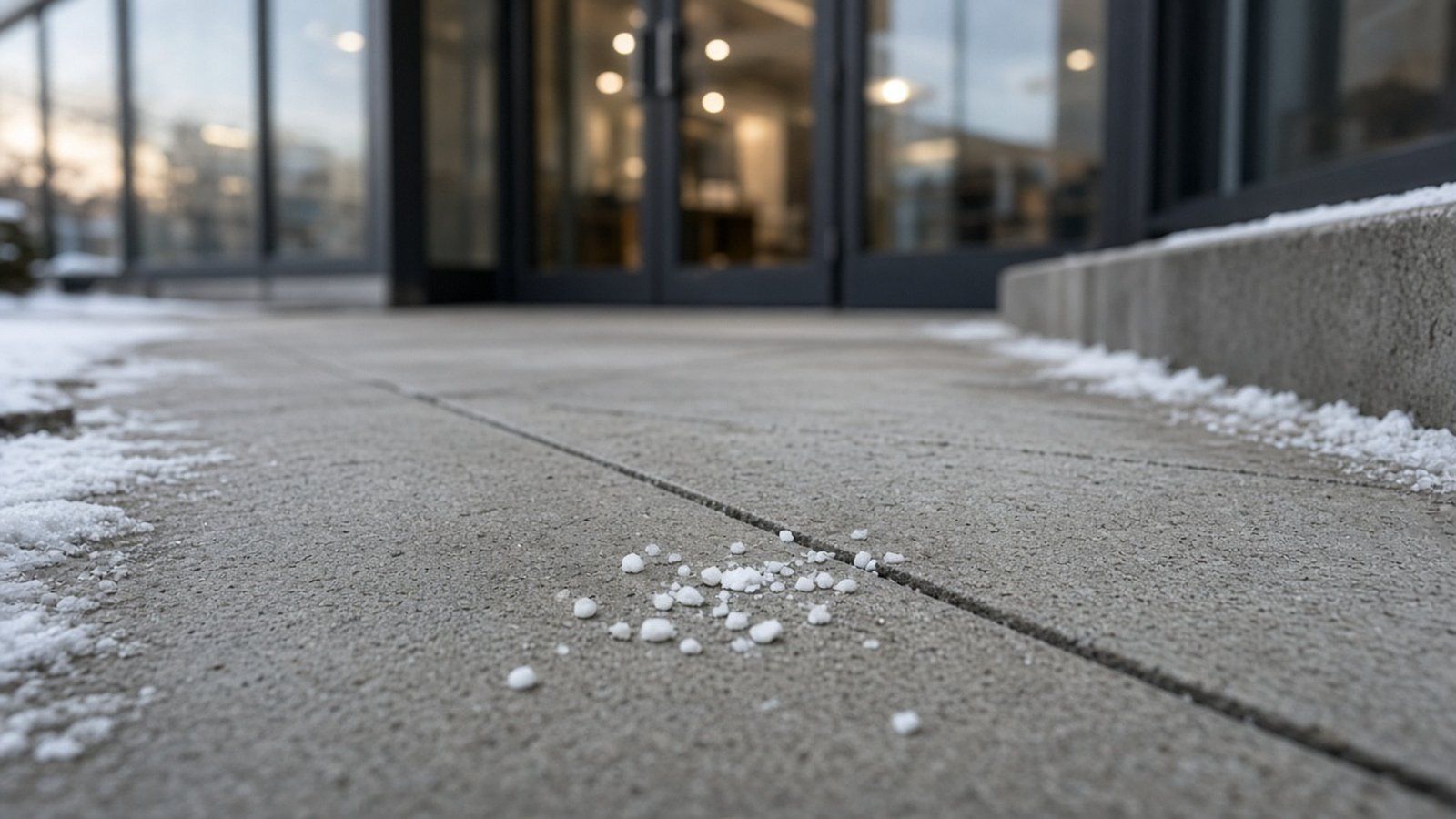
- If snow and ice cannot be safely removed, sand or another abrasive has to be applied within 24 hours so the sidewalk is safe to use.
- Snow removed from private property must be deposited on that property, not in the city right-of-way.
- Snow may not be deposited against a fire hydrant or traffic control device, or on any sidewalk, street, transit loading area, or designated emergency access lane.
Two things follow for your board. First, the ordinance puts the duty on the property's owner, occupant, or agent, and your declaration's split between the association and owners does not stop the clock, so the perimeter sidewalks along city streets need a named owner on your map. How the two interact for a particular community is a fair question for the association's attorney. Second, the placement rules limit where snow can go on tight sites. A community with narrow streets, small front yards, and long perimeter sidewalks may have very few legal places to put snow, and that belongs in the scope conversation in the fall, not in an operator's judgment call in the middle of a storm night.
If your community sits outside city limits, your county or town code sets its own sidewalk and snow placement rules, so look those up too.
Turning the Map Into a Winter Scope
Your finished map becomes the scope your provider works from. List the areas in priority order so the crew knows what matters most when time and equipment are stretched:
- Emergency access and the main drives into the community.
- Shared parking and common walkways, including mail and trash access.
- Amenity entrances that stay open in winter.
- Any owner areas that the declaration assigns to the association.
Name where snow will be stored on site, ahead of time, so nobody improvises against the ordinance limits above. If an amenity has accessible parking, keep those spaces and their route on the priority list. ADA.gov's overview of accessible parking explains how the spaces, access aisles, and routes to the entrance fit together.
State the exclusions as clearly as the inclusions. A scope that says assigned driveways and stoops are owner responsibility is doing as much work as the list of what the association covers, because it tells both the provider and the residents where the line is.
Once the scope is settled, it goes into writing. An HOA snow removal contract is where the terms live, and our guide on what to look for in a snow removal contract covers that side. Condo snow removal follows the same document-first approach. Condominium declarations often treat more of the property as common or limited common elements, which can push more of the walks and parking into the association's scope, so the reading order above matters even more.
Telling Residents Before the First Storm
Share the map with owners before the first storm, not after the first complaint. A one-page map or a short newsletter item heads off a lot of frustration, and it costs the board little more than an hour of formatting.
If your community has private streets and guest lots, use the rules and channels you already have to ask residents to move vehicles on storm nights. Keep the request consistent with your documents. Midwinter is a poor time to invent new parking rules, and a request residents can actually follow does more than a rule they ignore.
Tell owners plainly what they clear themselves. A sentence like "the association clears the walk to your stoop; the stoop itself is yours" answers a question residents otherwise settle by guessing.
Give residents one clear way to report a missed area: an email address, a portal, or a phone number. A named channel beats a neighborhood social media thread, and it leaves the board a record of what was reported and when.
Finally, make sure every message restates the governing documents rather than contradicting or stretching them. If a newsletter and the declaration disagree, the declaration wins, and the board has created the very mix-up it was trying to prevent.
Budgeting for Snow Without Surprises
Snow removal is a recurring operating expense that rises and falls with the winter, and boards budget for it under their documents and reserve policies like any other recurring cost. A finished map makes that budget easier to build, because it shows exactly which areas the association is paying to clear.
One allocation rule is worth knowing. The Colorado legislature's summary of CCIOA notes that in communities created after 1992, common expenses for a limited common element must be assessed only against the units it benefits. If your association clears assigned pads or driveways that serve specific units, ask your manager or attorney how that rule applies to your snow costs.
From Governing Documents to a Winter-Ready Community
The sequence is straightforward once it is on paper. Read the declaration, assign every area to a responsible party, layer on the city or town rules for streets and sidewalks, then hand the same written answer to your provider and your residents. Communities that skip that step tend to replay the same arguments every winter.
APS Alpine Property Services LLC is a family-owned Montrose company serving the community since 1995, with more than 50 years of combined experience. Our snow and ice management work covers commercial properties of any size, including plowing, de-icing and salting, and ongoing winter maintenance plans. If your board or management company would like to talk through the community's common areas before the season gets going, call us at (970) 765-5904 for a free estimate or reach us through our contact page.