Ice Melt Damage on Concrete: Why Walks Flake and How to Limit It
You notice it on the first warm afternoon of spring. The entry apron that looked crisp last fall now has rough, pale patches, a little grit collects by the door, and the edges of a few control joints look chewed. If you manage a commercial property, an HOA or an office park around Montrose, that wear lands on your list, and the first question is usually whether the winter's ice melt caused it.
Ice melt damage to concrete is real, but it is rarely as simple as "salt eats concrete." Water, freeze and thaw cycles, drainage, the age of the slab and the amount of product all play a part. Once you see how those pieces fit together, you can keep walks safe all winter and still hand over sidewalks in better shape come spring.
What Ice Melt Damage Looks Like on Walks and Entries
The term you will see most often is scaling. The National Ready Mixed Concrete Association describes scaling in its
CIP 2 guide to scaling concrete surfaces as local flaking or peeling of the finished surface. It usually starts in small patches that can merge over time. Light scaling stays in the surface mortar and does not expose the coarse aggregate. Moderate scaling exposes the stone underneath, and in severe scaling the aggregate clearly stands out.
You may also hear contractors talk about spalling, which generally refers to deeper chips and pieces breaking away, and about joint deterioration, where the edges of saw cuts and control joints break down. On a typical property, the wear tends to show up in the same few places:
- Entry aprons and landings, where meltwater from boots and treated walks collects
- Stairs and curb ramps, which usually get extra attention because slips are most likely there
- Low spots and joints that hold water instead of shedding it
- Walks next to snow piles or downspouts, where melt runs across the slab and refreezes
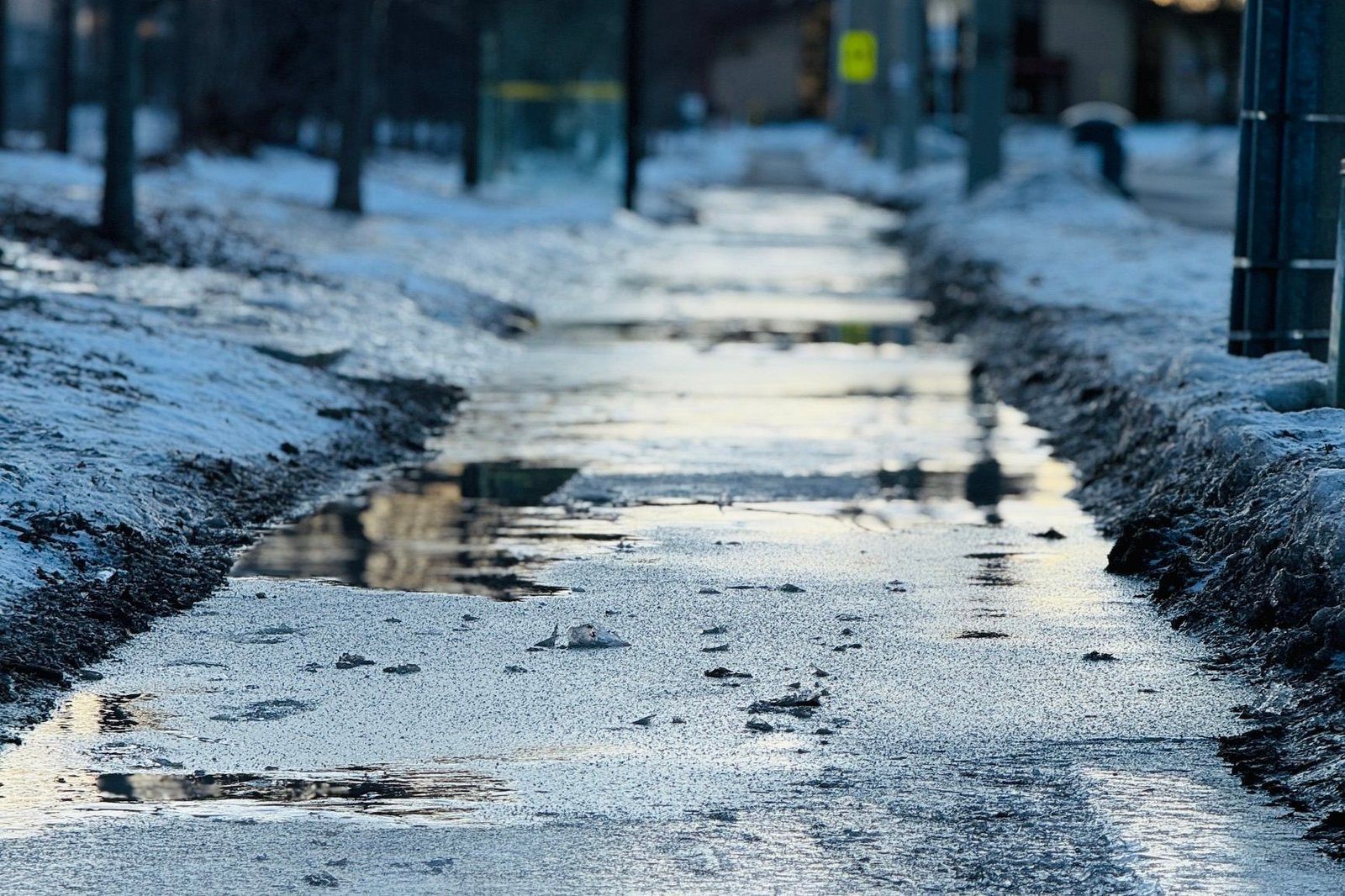
That pattern is a clue. Damage follows water. NRMCA notes that poor drainage, which lets salt solutions accumulate on the surface, increases the severity of the exposure and can cause scaling on its own.
It also helps to keep the damage in perspective. NRMCA calls minor scaling a cosmetic issue that may not need repair, and says light to moderate scaling can be repaired with bonded resurfacing. A flaky apron is worth watching and planning around. It is not automatically a failed slab.
Does Ice Melt Damage Concrete?
The short answer is that it can, mostly by making an existing weakness worse. Two different processes are at work.
Freeze and thaw in wet concrete
The main driver of scaling is physical. Concrete that is saturated with water and exposed to repeated freezing and thawing is vulnerable, because water expands as it freezes and stresses the surface. NRMCA explains that deicing chemicals make this worse by increasing how saturated the surface gets and by increasing the number of freeze and thaw cycles the surface goes through. Melting ice on a cold slab means more water in the top layer and more chances for it to refreeze.
The concrete itself matters as much as the product on top of it. Air-entrained concrete contains a huge number of tiny air bubbles that give freezing water room to expand. NRMCA lists missing or insufficient entrained air, weak or overly porous mixes, poor finishing, inadequate curing and excessive deicer use on new concrete among the common causes of scaling. Two walks treated exactly the same way can wear very differently because of how they were poured.
Chemical reactions in the cement paste
There is a second concern that has drawn more research in recent years. The Federal Highway Administration's tech brief on
chemical deicers and concrete pavement explains that calcium chloride and magnesium chloride can react with calcium hydroxide in the cement paste to form calcium oxychloride, an expansive compound that can damage the concrete even without freezing. FHWA's brief is written about highway pavement, but it points to joints as a common place for this distress, especially where salty solutions get in and do not drain out.
Concentration is the key variable. FHWA notes that concentrated liquid solutions applied to dry pavement can be absorbed directly into the surface and joints. It also describes its recommendations for this type of distress as still under development, so treat it as a reason for moderation rather than alarm.
What that means for your property
Put together, the risk climbs fastest in four situations:
- Concrete in its first winter
- Weak, porous or poorly finished surfaces
- Slabs and joints where salty meltwater sits
- Areas that get heavy or concentrated applications storm after storm
The goal is not to stop de-icing. A slick stair or ramp is a far bigger problem than a flaked surface. The goal is to de-ice in a way that controls those four factors.
Which Deicers Matter Most for Salt Damage on Concrete
Product labels can make this confusing, and the sources do not agree on everything. NRMCA considers sodium chloride (rock salt) and calcium chloride acceptable for concrete, while FHWA raises concerns about calcium chloride and magnesium chloride at high concentrations. Part of the difference is context, since FHWA's work focuses on pavement exposed to concentrated solutions. Either way, how much you use, and where the resulting solution ends up, matters as much as the product name on the bag.
NRMCA is also clear that ammonium sulfate, ammonium nitrate and magnesium-based salts should never be used as deicers on concrete. Here is how the common options compare:

| Deicer type | What concrete sources say | Practical takeaway for your property |
|---|---|---|
| Sodium chloride (rock salt) | NRMCA CIP 2 lists it as acceptable for concrete when used in moderate amounts | Reasonable on mature concrete; the bigger risk is heavy use and salty water that sits |
| Calcium chloride | NRMCA lists it as acceptable; FHWA notes it can react with cement paste at high concentrations | Keep amounts moderate and do not let concentrated solution pool in joints |
| Magnesium chloride and magnesium-based salts | NRMCA says never use them as a deicer and notes they can be tracked onto concrete from roads; FHWA flags the same chemical concern | Worth asking about for walks and entries; expect some tracked-in exposure near busy highways |
| Ammonium sulfate or ammonium nitrate | NRMCA says never use them as a deicer on concrete | Leave them off concrete entirely |
| Clean sand or grit | NRMCA recommends clean sand for traction on newly placed concrete | Adds traction without melting; useful on first-winter slabs |
One detail is especially relevant in Colorado. NRMCA notes that magnesium-based salts are used to treat roads ahead of storms and can be tracked onto concrete by vehicles. The Colorado Department of Transportation's
snow removal and safety page lists magnesium chloride liquids and a solid product made of granular salt and magnesium chloride among the deicers its crews use on state highways. If your property sits along a busy road, some of what reaches your walks arrives on tires and boots, whatever you choose to spread yourself.
Salt on New Concrete: Why the First Winter Is Different
If you remember one rule from this article, make it this one. NRMCA recommends avoiding deicing chemicals on newly placed concrete when possible and using clean sand for traction instead. Its summary is to avoid deicers in the first winter and use them in moderate amounts after that.
NRMCA also urges caution with exterior concrete placed in late fall, winter or early spring, when it may freeze while it is still saturated. If new walks, pads, curb ramps or a patio went in on your property this year, especially late in the season, tell whoever handles your winter service before the first storm. A slab that is treated like seasoned concrete in its first winter is the slab most likely to show scaling in spring.
Habits That Limit Wear Over a Winter
Most of what you control is not the product on the pallet. It is how much goes down, where the water goes afterward and what the crew knows about the site.
Keep applications moderate
NRMCA is plain about this: excessive applications increase the potential for scaling. More product does not mean safer walks once the ice is handled, and leftover chemical becomes concentrated brine in joints. Timing and over-application are covered in more depth in our guide to
commercial ice management, so the short version here is to treat what needs treating and not much more.
Rinse or remove residue when conditions allow
NRMCA suggests hosing off salt that cars deposit on driveways and garage slabs when conditions permit. The same idea carries over to a commercial site, which usually means waiting for a mild, dry stretch so you are not creating a new ice hazard, then clearing the residue left at entries, stair landings and along the edges of walks.
Fix the drainage you already know about
Since poor drainage increases the severity of the exposure, the spots where water ponds after every melt are the ones to fix first. Look at downspouts that discharge across walks, slabs that have settled toward a building and joints that stay wet. Snow storage matters too. Piles placed uphill of a sidewalk will feed meltwater across it for weeks, which is one reason pile placement deserves a spot in your plan for
parking lot snow removal.
Mark sensitive areas on the site map
New concrete, stairs, ramps and any slab that already shows wear should be marked for the winter crew. A provider can only adjust treatment on surfaces it knows about.
Consider a breathable sealer next summer
NRMCA recommends a commercially available silane or siloxane breathable sealer or water repellent made for concrete slabs, applied when the concrete is reasonably dry and following the manufacturer's directions. It names late summer, after a few dry days, as an ideal time. That is a project for a concrete or sealing contractor, so it belongs on next year's calendar rather than this winter's.
Walk the property in spring
After the snow melts out, walk the site and note new scaling, damaged joints and places where water stood. Photos from the same spots each year make it easy to see whether things are getting better or worse, and they give you something concrete to discuss with your winter provider and any repair contractor.
Questions to Ask Your De-Icing Provider
Whoever handles your winter service, these questions help you understand how your concrete will be treated:
- What material do you use on walks and entries, and is it different from what goes on the parking lot?
- How do you handle concrete that is in its first winter?
- Can you use sand or grit on specific areas instead of chemicals?
- How do you treat stairs, ramps and landings?
- Where will snow piles go, and will their meltwater cross any walks?
A good provider will want to know where your new or problem concrete is before the first storm, not after. If you are comparing options, our
snow removal services page outlines how we approach snow and ice management for commercial properties.
Planning Winter De-Icing With Your Concrete in Mind
Slip safety comes first, and nothing here argues for leaving ice on a walk. The point is that the wear you see each spring is mostly shaped by things you can plan for: protecting first-winter concrete, keeping applications moderate, moving water off the slab and letting your crew know which areas need a lighter touch.
Alpine Property Services is a family-owned Montrose company that has been serving the area since 1995, and our snow and ice management includes de-icing and salting for commercial properties of any size. If you would like to talk through a winter plan for your walks, entries and lots, call us at (970) 765-5904 for a free estimate or reach out through our
contact page.