How to Compare Parking Lot Maintenance Companies
You are not comparing totals. You are comparing scopes. A company's behavior before the contract is signed is also a preview of its behavior during it. Here is what to actually evaluate.
Local Commercial Experience on the Western Slope
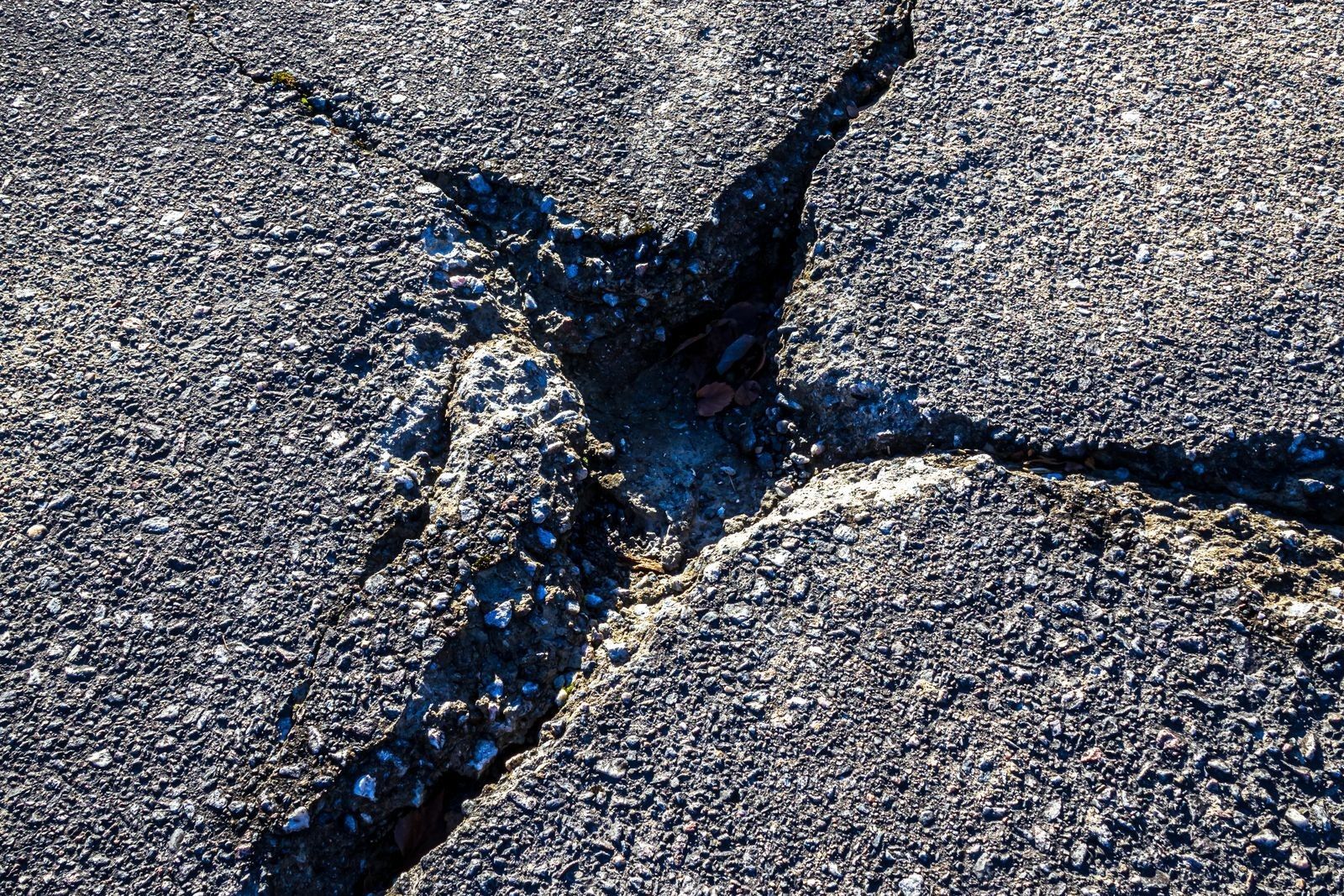
Climate is not a footnote in this region. Freeze-thaw cycles, plow blades, de-icing residue, and high-elevation sun all change how pavement wears and how seal coat cures. A company that works Montrose, Delta, and the surrounding Western Slope year-round has usually seen the local failure patterns: edge cracking after hard winters, plow scuffing along drive lanes, alligator cracking where traffic concentrates. That kind of pattern recognition is hard to pick up from a manual, and it is not automatic for an out-of-area bidder.
This is also where you separate commercial experience from residential work, because they are not the same job. A commercial lot has traffic volume, tenant access, and phasing problems that a driveway does not. One useful question to ask directly: "How much of your work is commercial lots, and how much of it is around here?" Listen for specifics, not reassurance.
A Site Visit Before Any Number Is Written
A serious parking lot maintenance company walks the lot before quoting. There is no version of a real scope that comes from a satellite view and a square footage estimate alone.
The walk itself is one of your best evaluation tools, so pay attention to what the estimator notices. Do they measure, or estimate? Do they photograph problem areas? Do they distinguish a surface issue from a structural one, or treat everything as the same job? Do they ask about traffic, tenants, and when the lot can actually be worked, or do they quote as though the lot were empty?
The contractor who describes your cracks in plain language you can picture is easier to trust than the one who talks in generalities. Specific description is evidence of specific observation. Vagueness at the walk usually becomes vagueness in the contract.
A Written Scope You Can Line Up Next to Another Bid
This is the core comparison tool, and it is what turns three mismatched bids into a real decision.
A useful proposal names each service, states where on the lot it applies, and lists what is excluded. "Asphalt maintenance, lump sum" is not a scope. When you receive proposals, lay them side by side, service against service, area against area. If Bid A includes seal coat and Bid B does not, the totals are not comparable no matter how similar they look at the bottom of the page. If Bid A includes sweeping twice and Bid B includes it once, same problem. The differences between bids are usually sitting in the line items, visible the moment you stop reading totals first.
If you are still unsure what the lot actually needs before you can judge a scope, that is the planning question again. Use the planning guide linked earlier to build the underlying scope, then make the bids answer to it.
Proof of Insurance, Without Assumptions
Ask any company you are considering for a certificate of insurance, and confirm it is current. Commercial work on occupied property carries liability, and the certificate is the document that shows coverage exists. You are not underwriting the policy. You are confirming it is real.
Do not assume. A verbal "of course we are insured" is not a certificate. A certificate with an expiration date that falls inside your project window is worth a follow-up question, because coverage that lapses mid-project is a problem you would rather catch early. This is a general precaution for any contractor, not a comment on any specific company.
Honesty About What Your Pavement Does Not Need
This is one of the strongest trust signals in the evaluation, so weight it heavily.
A company worth hiring will tell you when your pavement is not a good candidate for
asphalt sealcoating this year, or when a targeted repair is a better use of the budget than coating over a failure. Seal coat is a surface treatment, and surface treatments applied over structural failure buy appearance, not life. Pressure to coat pavement that has visibly failed, with structural cracking, potholes, or heavy alligatoring, is not just a red flag. It is a spending mistake with your name on the invoice.
The same honesty applies in the other direction. A company that tells you the lot does not need the full program yet, and can explain how they are reading remaining pavement life, is showing the behavior you want after the contract is signed. If that remaining-life question is the one in front of you,
how long asphalt lasts is covered separately, without repeating those ranges here.
How They Handle Traffic, Tenants, and Access During Work
A commercial lot is usually open while work happens, which means logistics are part of the job, not an afterthought.
Ask how the company phases the lot so tenants and customers keep access. Ask how wet material and closures get marked, and what happens when a delivery truck shows up at the wrong hour anyway. Ask who communicates with your tenants, you or the crew. Vague answers here predict real disruption later, because phasing is a planning skill and you are watching the company plan in front of you.
Red Flags When Evaluating Parking Lot Maintenance Companies
Five warning signs, each with the risk attached:
- A quote produced without anyone walking the lot. The scope is guesswork, and the number will either be padded to cover the guess or lowballed and corrected later.
- One vague lump sum with no service breakdown, no exclusions, and no locations. You cannot compare it to anything, and when a disagreement arises there is nothing to point to.
- Pressure to seal coat pavement that is visibly failing. Structural cracking, potholes, or heavy alligatoring do not get fixed by coating, and money spent there is money not spent on the actual problem.
- No written exclusions at all. Exclusions are not fine print to avoid. They are the reference point that prevents disputes about what "the whole lot" meant.
- Scope terms that shift mid-conversation. "Maintenance" becomes "patching" becomes "pave" depending on your objection. If the story changes to match your budget, the work may too.
None of these require special expertise to spot. They only require you to notice what is missing from the paperwork and the conversation.
Getting Eyes on Your Lot
Alpine Property Services is a family-owned Montrose company serving the area since 1995, with more than 50 years of combined experience. Within asphalt maintenance, the work includes parking lot sweeping, seal coating, paving, striping, and parking lot and driveway repair. Alpine provides free estimates. Hold every bid you collect, including one from Alpine, to the standard above: a walk of the lot, a clear written scope, and a proposal you can line up next to another bid.
If repair, rather than coating, is the honest conversation,
parking lot repair is worth resolving before a maintenance program is layered on top.
The right parking lot maintenance company is the one whose proposal you can line up against another and understand exactly what you are buying, service by service, area by area. If you want that kind of look at your lot, call us at (970) 765-5904 for a free estimate, or reach us through the
contact page.