Commercial Parking Lot Maintenance in Montrose: A Practical Planning Guide
A parking lot usually gives its warning signs early. Faded traffic lines, open cracks, a pothole near a drain, or water that remains after a storm all point to work that should be planned before it becomes urgent. For commercial properties in and around Montrose, winter moisture, snow operations, sun, and vehicle traffic make that planning especially important.
The goal is not to treat every surface defect the same way. Understand the pavement condition, correct water or structural problems first, then protect the surface and renew markings when they will hold up.
Published by APS Alpine Property Services LLC. This article provides general maintenance information and does not replace project-specific pavement, drainage, safety, accessibility, or local-code advice.
Quick Answers
- Inspect and document before choosing a treatment.
- Repair cracks, drainage, and failures before coating.
- Use product data and the forecast to schedule.
- Plan restriping with coating, repair, and traffic phasing.
- Compare proposals by written scope, not just price.
Start With a Condition Walk
Before selecting a service, document what you see. A short walk after snowmelt and again after a substantial storm creates a useful baseline. Take wide photos for context and close photos of cracks, potholes, puddles, damaged curbs, wheel-path wear, and faded markings.
Date them. A manager who can show changes over time will get more useful recommendations than one who can only describe a problem from memory.
Sweeping is a practical first step because it clears the surface for inspection and helps keep grit and debris out of drainage areas. The EPA’s NPDES program provides federal context for controlling pollutant discharges, including stormwater. The specific sweeping needs for a lot depend on traffic, tree cover, adjacent landscaping, snow operations, and the property’s drainage system.
Use the table to organize the conversation with a contractor. It is a planning aid, not a pavement design or a substitute for an on-site evaluation.
| What you see | What it may indicate | Next step to discuss |
|---|---|---|
| Gray, dry surface with fine hairline cracks | Early oxidation and surface wear | Crack sealing and a protective coating plan if the pavement is otherwise sound |
| Wide cracks or broken edges near curbs and joints | Water entering at localized weak points | Crack treatment, localized repair, and a drainage check |
| Potholes at low spots | Water may have affected the pavement base below | Patch repair and investigation of how water leaves the area |
| Widespread interconnected cracks, settling, or rutting | Possible structural or base distress | On-site evaluation before coating; repairs, overlay, or reconstruction may be considered |
| Standing water after rain or snowmelt | Drainage or grading deficiency | Correct water movement before spending heavily on surface treatments |
| Sound asphalt with faded lines | The pavement may need a visibility and layout refresh | Restriping and a review of traffic flow, pedestrian routes, and required markings |
Put the Work in the Right Order
Parking-lot maintenance works best as a sequence. Start by cleaning and documenting the surface. Next, deal with water entry, cracks, and failed areas. Once the pavement is structurally ready, surface treatments and markings can follow.
Crack Treatment and Repairs Come First
Cracks are an entry point for water. In a freeze-thaw climate, that matters because water can move into the pavement and worsen existing damage as temperatures change. The Asphalt Institute provides technical resources on pavement materials, design, testing, and performance; for a particular lot, a contractor should identify whether the observed failure is limited to the surface or extends below it.
Patching is generally considered for isolated failures. An overlay is a new asphalt layer placed over a prepared existing surface; it may be considered where the base—the pavement structure below the visible surface—is stable and needed repairs have been made. Widespread interconnected cracking, repeated failure in the same area, or settlement calls for a closer look before any coating is proposed. A fresh surface treatment cannot solve a base or drainage problem.
Sealcoating Protects Sound Pavement
Sealcoating is a surface treatment for pavement that is still a good candidate for maintenance. It should follow cleaning, crack treatment, oil-spot preparation where needed, and repair work. Ask the bidder to identify the product, the number of coats, site-preparation steps, expected cure conditions, and how the crew will respond if the forecast changes.
Resealing frequency depends on traffic, sun exposure, moisture, prior maintenance, and current condition. Use a documented inspection to set the next treatment window instead of choosing an interval without looking at the pavement.
Restriping Follows Surface Work
Once repair and coating work are complete, markings can be renewed. This is also the right time to review circulation arrows, crosswalks, stall layout, loading areas, fire-lane markings, and accessible parking. The ADA accessibility standards apply to covered commercial facilities and include requirements for parking spaces, access aisles, signs, and accessible routes. Confirm the requirements for a specific property with the appropriate local authority or qualified professional before changing a layout.
For a company-specific example of this scope, see APS Alpine Property Services’ commercial parking-lot striping services. Its current page describes parking-lot striping and markings as part of the company’s offering.

Schedule Around Conditions, Not a Fixed Date
Montrose-area work needs a realistic weather window. Spring is useful for discovering what winter left behind: debris, new cracks, potholes, plow damage, and drainage issues. Warm, dry periods are typically used for repairs, crack treatment, surface work, and striping, subject to the particular product’s technical instructions. Late fall is a sensible time to address open water-entry points before winter, if conditions allow.
For an occupied retail center, office building, lodging property, multifamily community, or public-facing facility, access is part of the scope. Divide the lot into workable sections, plan delivery and trash windows, notify tenants or users, mark closed areas clearly, and coordinate reopening around actual cure guidance. A project can be technically correct and still go poorly if customers cannot understand where to park.
When to Stop and Get a Site Evaluation
Bring in a qualified pavement or drainage professional when interconnected cracking covers a broad area, pavement is settling or heaving, potholes return after repair, water remains at the same low points, or planned work would alter drainage or a regulated parking layout. Those are signs that the question may be larger than routine surface maintenance.
Build a Scope You Can Compare
Two estimates can differ because they describe different work. Before comparing totals, make sure each proposal explains the preparation, repairs, coating system, markings, traffic control, access phasing, cleanup, and any exclusions. If one quote includes crack treatment and another does not, they are not alternatives for the same job.
Ask each bidder to answer three questions in writing:
- Which observed conditions are being repaired, and which are excluded from the price?
- What preparation, product system, coat count, marking quantity, and reopening conditions are included?
- How will work be phased so vehicles, deliveries, pedestrians, and emergency access are managed?
For a company-specific example, APS Alpine Property Services’ commercial asphalt-maintenance service lists sweeping, sealcoating, paving, striping, and repair among its services. Use any contractor visit to compare the stated scope against the conditions documented in your own walk-through.
Protect the Lot Through Winter
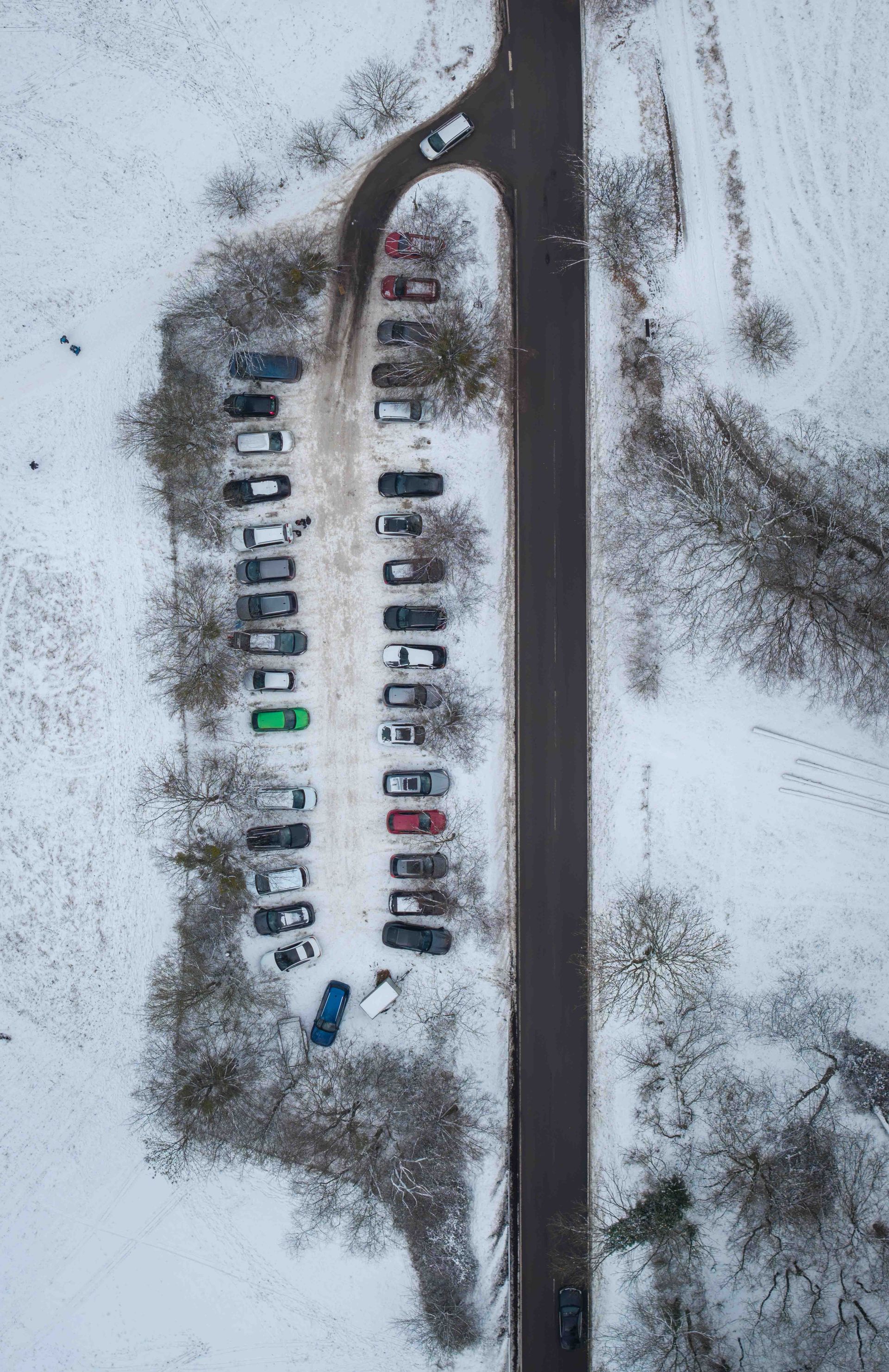
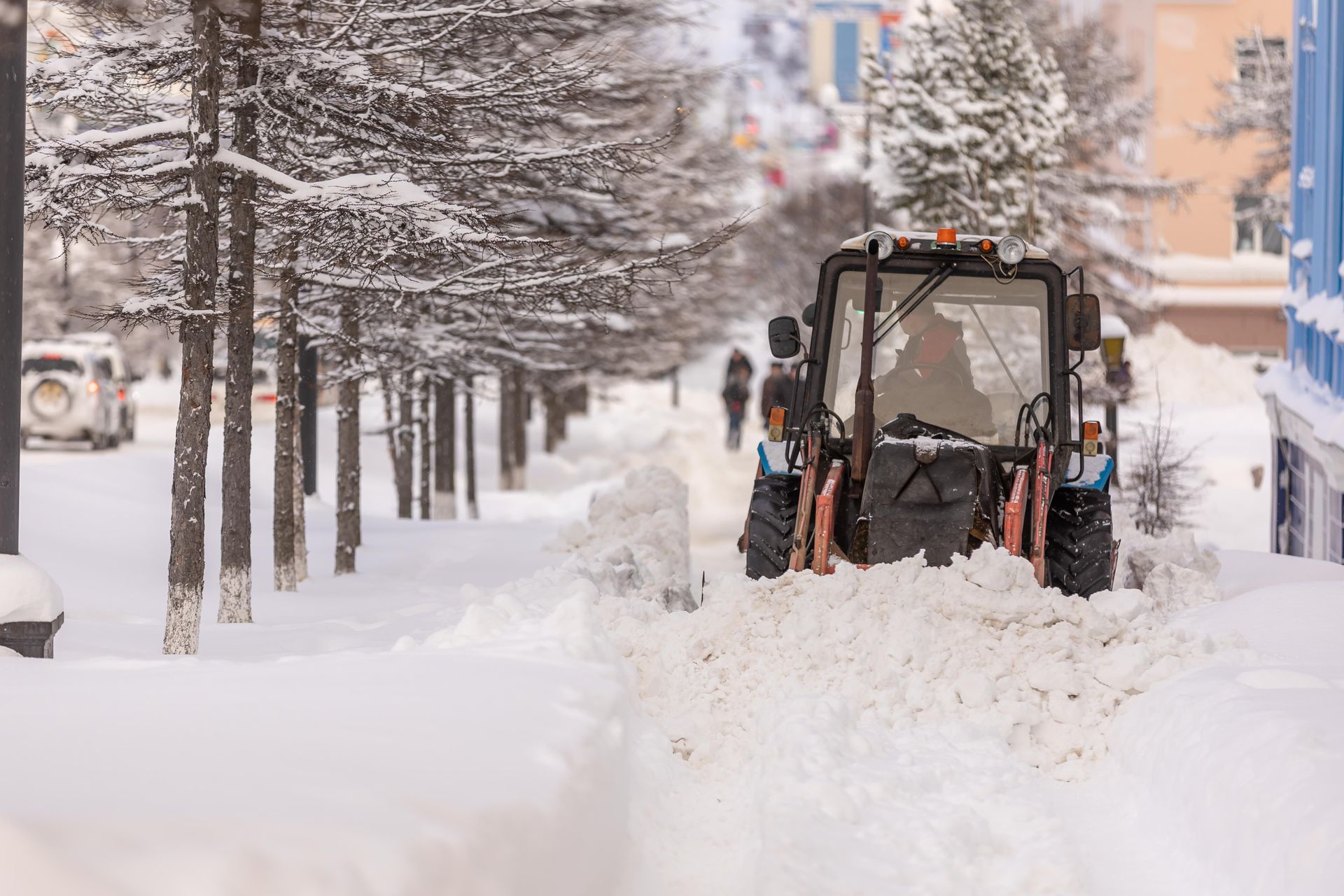
Before the snow season, mark curbs, islands, wheel stops, and other plow obstacles so they remain visible. Decide where snow will be stacked so meltwater is not directed toward low areas or repeated pavement failures. After storms, look at the locations that usually hold water and inspect for plow damage around edges and raised features.
When winter breaks, sweep the remaining grit and debris, photograph any new defects, and compare them with the previous season’s record. That history helps separate a one-off surface issue from a repeated water or base problem. It also gives owners, boards, and property managers a factual basis for a reserve request or a maintenance decision.
Parking-lot maintenance is easier to budget when it is treated as a regular property task rather than a rescue project. Dated photos, a clear repair history, and a written scope make the next decision easier for a property manager, owner, or board.