How to Choose a Line Striping Company for Your Parking Lot

You walk the lot on the first warm morning after a Western Slope winter, and the picture is familiar. Stall lines are ghosts. Two trucks straddle three spaces. The drive-lane arrow is a smudge, and a visitor circles twice before parking crooked against the curb. If you manage property around Montrose, you have seen this scene, and it usually triggers the same question: how do you pick a line striping company that will do the job right the first time?
That question is exactly what this guide answers. It is written for HOA boards, property managers, and business owners comparing providers, and it covers what professional striping includes, when to restripe, what Western Colorado conditions do to your paint, and what to ask before you sign anything.
This article is general planning information only. It is not a substitute for a written contract, manufacturer instructions, or your local ordinances and utility requirements.
TL;DR: Choose a striping contractor based on scope clarity (written stall counts and marking types), surface prep, layout accuracy, code awareness for accessible stalls and fire lanes, sequencing with sealcoat or paving work, and proof of insurance. Get bids on identical scope, and ask questions before the paint truck shows up.
What Professional Parking Lot Striping Includes
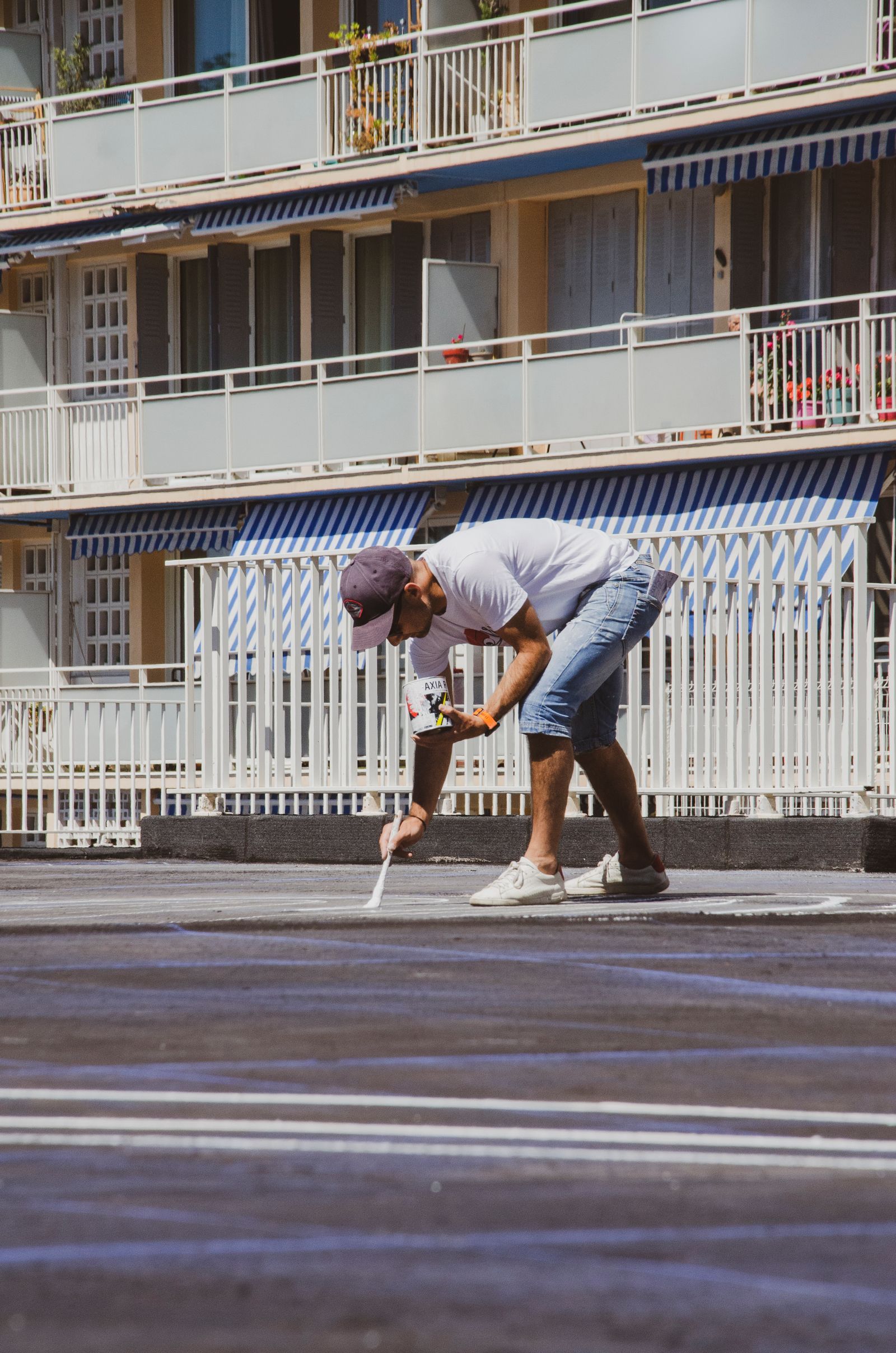
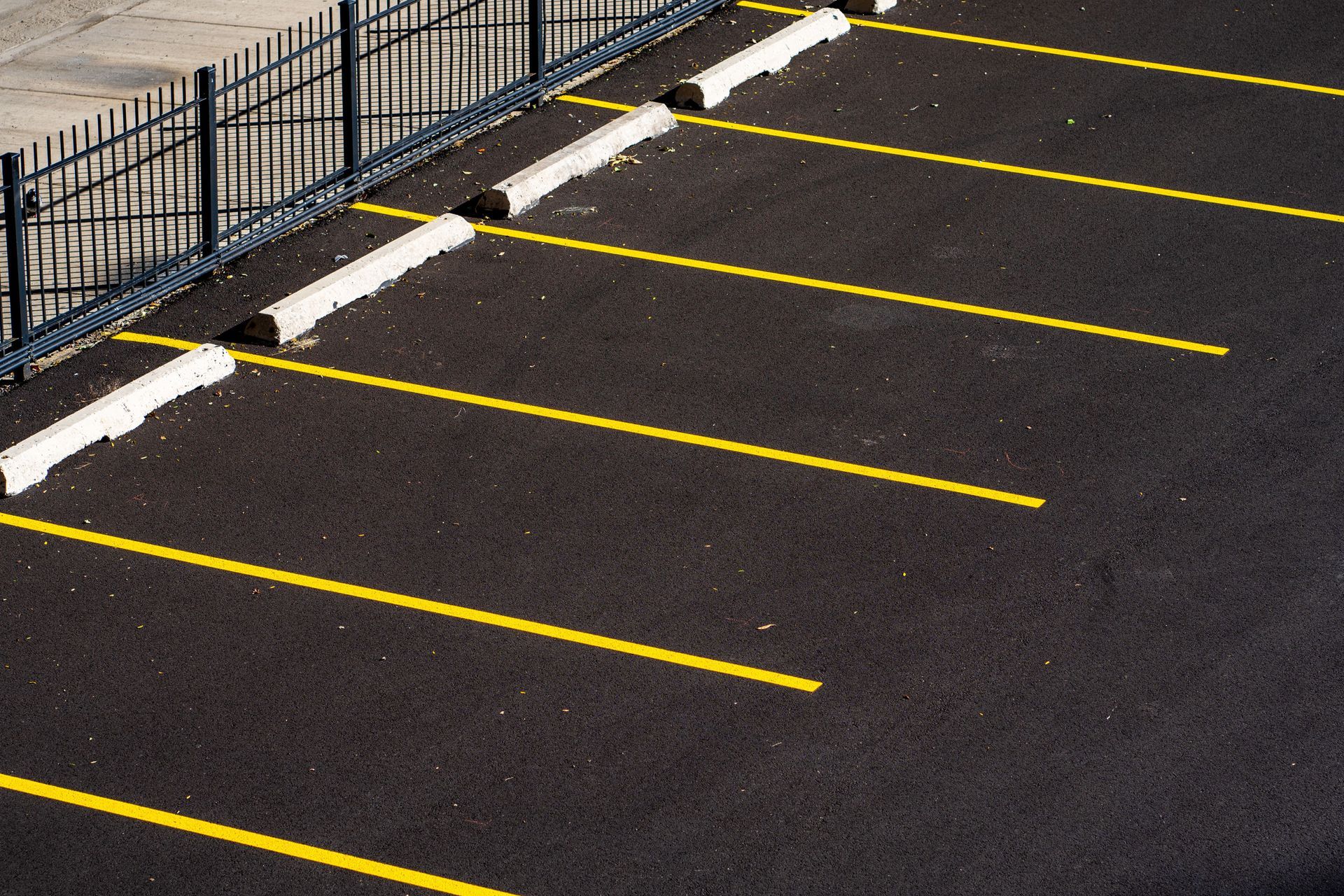
Professional parking lot striping is more than running a striper down a row of stalls. A competent crew handles:
- Restriping existing layouts, refreshing lines that have faded or worn
- Laying out brand-new markings after paving or sealcoating
- Stall lines and stall delineation
- Directional arrows and lane markings
- Stop bars and crosswalks
- Hatched no-parking zones and fire lane markings
- Accessible (handicapped) stall markings and symbols
- Numbering, lettering, and custom stencils for assigned stalls or zones
Alpine Property Services covers this scope, along with lot sweeping, on our parking lot painting page. Note that striping is its own discipline. Full lot maintenance, meaning patching, crack sealing, and sealcoat planning, is a separate conversation, even though the two often work together.
Restriping versus a brand-new layout
Restriping an existing lot sounds simple: paint where the old lines were. But a good contractor treats it as a small audit. They should check whether the existing layout still makes sense for how the lot is actually used, whether lines have drifted over successive repaints, and whether the stall count still fits the property's needs. Old lines that have wandered half a foot out of true should be straightened, not faithfully reproduced.
A new layout is a bigger task. It involves field measurements, stall count planning, aisle widths, drive-lane configuration, and often a drawn plan. If the property is subject to site-plan review, the layout may need to match an approved plan on file with the city or county. A contractor who skips that verification step can create problems that follow the property for years.
Work that often happens in the same visit
Before any paint touches pavement, the surface should be swept and cleaned. Dust, gravel, and debris left under fresh paint become failure points, because the paint bonds to the grit instead of the pavement. Stencil refreshes, like re-painting stall numbers or accessible symbols, are usually bundled into the same visit.
Sequencing matters too. Striping belongs after sealcoat has cured, not before it. Cure times vary by product and conditions, and reputable crews follow the manufacturer's guidance rather than a rule of thumb. Industry resources such as the Pavement Coatings Technology Council publish guidance on sealcoat application and compatibility that contractors use to plan this sequence.

Signs It Is Time to Restripe Your Parking Lot
There is no universal repaint calendar. Repainting is condition-based, and the conditions are usually easy to see:
- Lines have lost contrast and read as gray-on-gray
- Markings are mainly visible only when the pavement is wet
- Drivers are straddling stalls or inventing their own angles
- Tenants or customers have complained about confusion or near-misses
- A walkthrough before a lease signing, refinancing, or inspection flags the markings
- Accessible stall symbols or signage are illegible, which is both a usability and a compliance issue
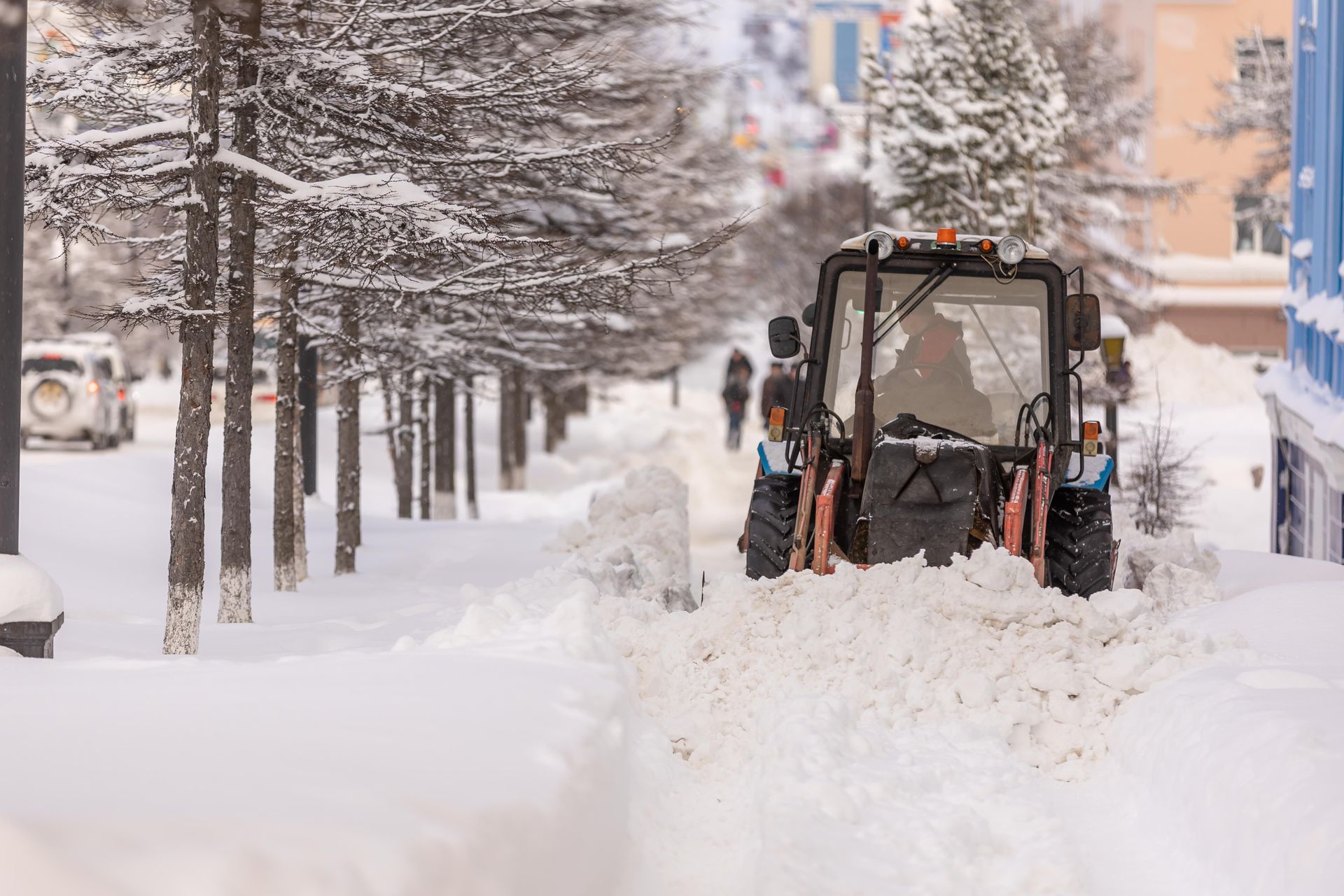
Certain events also trigger restriping: after a fresh sealcoat (old lines get coated over), after repaving, and after a harsh winter. Western Slope winters are hard on markings. Plow blades scuff and scrape, sand and gravel from deicing operations grind against paint under every tire, and deicing chemicals accelerate wear.
Add intense high-altitude sun, and coatings fade faster here than at lower elevations. The EPA notes that UV intensity increases about six percent per kilometer of elevation above sea level (roughly two percent per thousand feet), which is one reason mountain-town lots often look tired by spring. (EPA: Learn About the UV Index)
Why Western Colorado Conditions Affect Striping Choices
Beyond UV, freeze-thaw cycling, plow abrasion, and gravel-heavy winter treatments all shorten marking life. The practical implications are straightforward.
First, paint season is shorter here than at lower elevations. In communities like Telluride, Mountain Village, Silverton, and Lake City, the comfortable window for painting pavement is compressed between late snowmelt and early cold. If you manage property in those towns, scheduling flexibility matters more than it does in Montrose itself.
Second, local requirements differ by town and county. What passes in an unincorporated area may not match municipal standards for fire lanes, accessible stalls, or site-plan compliance. Always verify specifics with the authority having jurisdiction for your property.
What to Look for in a Line Striping Company
This is the core checklist. A strong line striping company distinguishes itself in five areas.
Relevant commercial experience
Ask about the kinds of lots a contractor stripes: retail centers, multi-tenant commercial properties, HOA common areas, medical and office parking. Commercial work has different demands than a residential driveway, from traffic control to layout review. Alpine Property Services is a family-owned business operating in Montrose since 1995, with more than 50 years of combined experience across our paving and property services work, and commercial lots are a core part of what we do.
Layout accuracy and a documented plan
Straight lines are not cosmetic. They determine stall counts, aisle usability, and whether drivers can read the lot at a glance. Look for a contractor who measures existing layouts, confirms stall counts before quoting, and works from a site plan when the property requires one. Lines should be readable from across the lot, not just up close.
Surface prep and materials questions
Two questions separate professionals from pickup-truck operations:
- How do you prep the surface? The answer should include sweeping, cleaning, and confirming the surface is dry. If old paint is peeling, ask how they handle it.
- What materials and conditions do you need? Paints should be traffic-rated for the application, applied within manufacturer-recommended temperature windows, and allowed proper dry-to-traffic time before cars return. Ask to see the product data sheets. Any contractor who cannot produce them, or who shrugs at the temperature question, is guessing.
Sequencing with sealcoat and paving
The typical order for a full lot refresh is: structural repairs first, then sealcoat, then cure, then stripe. Painting before the sealcoat has cured traps problems under the paint and can cause both coatings to fail. If you are planning a sealcoat or paving project, bring the striping conversation into the planning stage, not after. Our asphalt maintenance services page covers how these pieces fit together.
Questions to Ask Before You Hire
Take this list to the phone call or walkthrough:
- Will you sweep and prep the surface before painting?
- Do you restripe existing layouts only, or do you also design new layouts?
- How do you confirm stall dimensions and accessible stall placement? (The right answer defers to the ADA Standards and local code, not memory.)
- What happens if the weather changes mid-job?
- How soon can traffic return after painting? (The answer should come from the manufacturer's data sheet.)
- Can you coordinate with our sealcoat or paving schedule?
- Do you carry liability insurance, and can you provide a certificate?
- Can you provide a written scope with stall counts and marking types?
- Do you handle fire lane markings per local fire marshal requirements?
- Will you flag or cone the lot during the work?
A contractor's patience with these questions tells you as much as the answers do.
ADA and Local Code Considerations (general planning only)
This section is planning awareness, not legal advice. Accessible parking, including stall counts, dimensions, aisle requirements, and signage, is governed by the ADA Standards for Accessible Design, and local building or zoning codes may layer additional requirements on top. Fire lane markings are governed by fire code and typically enforced through your local fire marshal.
The practical move: ask your contractor to pull dimensions directly from the published standards, apply them to your lot, and confirm interpretations with your local authority having jurisdiction. Contractors who are vague about accessible stall requirements, or who dismiss the question, are showing you how the rest of the job will go.
What Influences the Cost of Line Striping
Pricing varies too widely to quote numbers here, but the factors that drive bids are consistent:
- Lot size and stall count
- Total linear footage of markings
- Restriping an existing layout versus laying out a new one
- Number of colors and specialty stencils or symbols
- Surface condition and how much prep is needed
- Whether sweeping is included or billed separately
- Coordination with a sealcoat or paving project
- Travel time for remote Western Slope sites
- Where you land in the paint season
When comparing bids, make sure every contractor is quoting the same scope. A bid that omits sweeping, or that assumes fewer stalls, is not cheaper. It is different work. Alpine Property Services describes competitive pricing and stands behind our work; compare scope side by side before you decide.
DIY Line Striping versus Hiring a Professional
For a tiny private pad, a single-stall touch-up, or temporary markings, DIY striping can make sense. Rental stripers exist, and a motivated property owner can paint a handful of clean lines on a good day.
But commercial lots change the math. Layout work involves real measurements and geometry. Surface prep and traffic-rated paint are not optional. Weather windows and dry-to-traffic times affect when cars can return. And crooked lines are expensive to fix, because correcting them usually means stripping or sealing over mistakes before repainting. Add liability exposure, code expectations for accessible stalls and fire lanes, and the need to control traffic during the work, and most commercial and HOA properties are better served by a professional crew.
Common Mistakes and Red Flags When Hiring a Striping Crew
A few recurring owner mistakes are worth naming:
- Painting over dirty or damp pavement
- Striping before a sealcoat has fully cured
- Keeping an outdated or non-compliant layout simply because the lines were already there
- Skipping the sweep to save a step
- Waiting until peak season, when crews are booked and you lose scheduling flexibility
And a few provider red flags:
- No written scope
- No insurance certificate
- Vagueness about accessible stall requirements
- Reluctance to explain prep steps
- A price quoted without seeing the lot or asking for stall counts
- Pressure to paint in poor conditions, such as on damp pavement or at marginal temperatures
None of these mean catastrophe. They mean risk, and most of them are avoidable with one careful conversation before the job.
How a Local Western Colorado Crew Approaches the Work
Alpine Property Services LLC is a family-owned company based in Montrose, serving commercial properties across the area since 1995, with more than 50 years of combined experience behind our work. For parking lots, our services include line striping and painting plus lot sweeping, and striping slots into the larger picture of pavement care: repairs, sealcoating, and paving that precede fresh markings. If you want to know more about who you would be working with, visit our About page.
Next Steps
Choosing well comes down to a handful of commitments from your contractor: a written, itemized scope; real surface prep; measured, accurate layout work; awareness of ADA and local code requirements; correct sequencing with sealcoat and paving; and proof of insurance. Ask the questions, compare identical scopes, and walk the lot together before any paint is mixed.
Ready to get your lot back in order? Call Alpine Property Services at (970) 765-5904 or visit our contact page for a free estimate on parking lot striping in Montrose and nearby Western Slope communities. You can also reach us at 340 Denny Ct, Montrose, CO 81401 or by email at alpinepropertyservices95@gmail.com.