top flower bed ideas |​ the tips to having a beautiful lawn

Admin • August 11, 2026

Share this article

TL;DR

  • What are the best flower bed ideas for beginners? Start with a front entry flower bed, walkway border, mailbox bed, tree-ring bed, patio-edge flower bed, or low-maintenance perennial bed. These are manageable, visible, and easier to maintain.
  • How do you start a flower bed from scratch? Choose the location, mark the shape, remove grass and weeds, improve the soil, install edging, choose plants for sun and water needs, plant with mature size in mind, then finish with mulch or decorative rock.
  • How do you keep grass out of flower beds? Use a clean edge, remove grass roots during prep, maintain the border, trim regularly, and use edging where needed. Reddit lawn and landscaping threads show this is one of the most common flower bed questions homeowners ask.
  • Do flower beds need edging? Yes. Edging separates turf from planting areas, keeps mulch or rock contained, makes mowing easier, and gives the lawn a cleaner, more professional look.
  • Should you use mulch or rock in flower beds? Mulch helps protect soil moisture and reduce weeds, while decorative rock can be lower maintenance in dry, high-visibility areas. Utah State University Extension notes that mulch helps prevent crusting, compaction, and water evaporation.
  • How do you stop weeds in flower beds? Start with clean bed prep, avoid exposed soil, use proper mulch depth, keep edges maintained, and remove weeds before they seed. UF/IFAS calls mulching “one of the most effective weed control strategies” for landscape planting beds.
  • How do flower beds help a lawn look better? Flower beds create structure, color, contrast, clean edges, and smoother transitions around patios, walkways, driveways, decks, trees, and water features.
  • What is the biggest flower bed mistake? Planting before planning. Flower beds often fail when they are too narrow, poorly edged, overcrowded, planted in the wrong sun exposure, or watered incorrectly.


The best flower bed ideas do more than add color to your yard. They help shape your lawn, improve curb appeal, reduce awkward mowing areas, guide people through the property, and make the whole landscape feel more intentional. Whether you own a home, manage a rental, maintain a commercial property, or want better-looking outdoor spaces around patios, walkways, decks, water features, or asphalt areas, the right flower bed design can make your lawn look cleaner, healthier, and more complete.


Flower beds are not just decoration. They are part of the property’s structure. A good bed can frame the front entry, soften the edge of a patio, protect grass around a tree, reduce trimming headaches, or turn a problem lawn strip into something attractive and easier to manage.

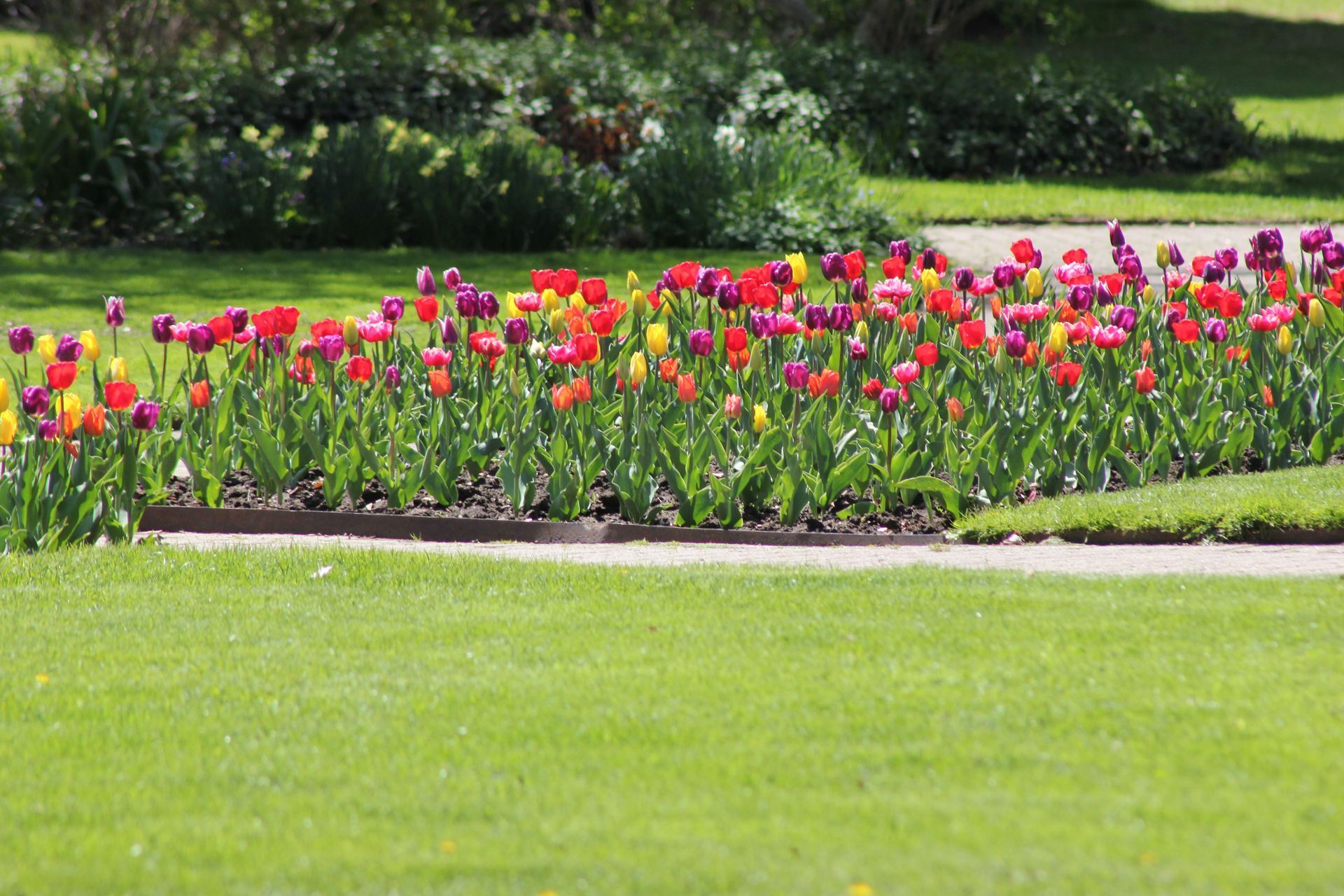
Colorful tulips blooming along a garden border beside a green lawn

Common Flower Bed Mistakes to Avoid


Making the Bed Too Narrow


Narrow beds limit plant options and often look cramped. If you want layered planting, give the bed enough depth for plants to grow without crowding the lawn, walkway, or building.


Planting Too Close Together


Plants are usually small when installed, but they grow. Overcrowding creates trimming problems, blocks airflow, hides plant shape, and can make the bed look messy. Always plan around mature width and height.


Ignoring Sun and Shade


Full-sun plants will struggle in shade. Shade plants can burn in exposed heat. Before choosing plants, observe how much sun the area gets throughout the day.


Forgetting Irrigation


Flower beds need the right water strategy. Some beds may work well with drip irrigation. Others may receive overspray from turf sprinklers. Poor watering can cause plant stress, weeds, runoff, or washed-out mulch.


Skipping Maintenance


Low maintenance does not mean no maintenance. Flower beds still need weeding, trimming, irrigation checks, cleanup, mulch or rock refreshes, and occasional plant replacement.


Flower Beds, Patios, Pavers, and Outdoor Living Spaces


Flower beds can make patios, paver walkways, decks, and water features feel connected to the lawn. Without beds, these features can look like they were dropped onto the property. With the right planting, edging, and transitions, they feel built into the landscape.


Paver walkways work especially well with planting borders because they guide traffic and protect grass from repeated foot wear. If people constantly cut across the lawn to reach a patio, shed, deck, or gate, a paver path with flower beds may solve the worn-grass problem.


Around water features, flower beds should be planned with splash, access, drainage, and maintenance in mind. Avoid overcrowding pumps, edges, or service areas. The most beautiful water feature will become frustrating if you cannot maintain it.


Flower Bed Ideas for Commercial Properties and Rentals


Commercial and rental properties need flower beds that look good without becoming fragile or labor-intensive. Entry beds, sign beds, parking lot borders, and walkway beds should be structured, durable, and easy to maintain.


For commercial landscaping, visibility is critical. Plants should not block signs, windows, lighting, doors, or driver sightlines. Beds near parking lots should also account for heat, snow storage, irrigation overspray, and foot traffic.


For rentals and HOAs, consistency matters. Repeating the same plant palette across multiple beds can make the property easier to maintain and more visually organized.


How Flower Beds Connect to Lawn Care


Flower beds can make lawn care easier when they are designed well. They can convert awkward mowing strips into clean planting areas. They can protect tree trunks from mower damage. They can define patio and walkway edges. They can reduce muddy or worn turf in high-traffic zones.


The key is to make the bed support the lawn. A good bed has a clean edge, appropriate plants, proper mulch or rock, and a shape that works with mowing. A poor bed creates more trimming, more weeds, and more maintenance headaches.


Final Thoughts: The Best Flower Bed Ideas Start With a Better Lawn Plan


The best flower bed ideas improve the whole property. They add color, but they also create structure, guide movement, define lawn edges, reduce maintenance problems, and strengthen curb appeal.


Start with the area that matters most, such as the front entry, walkway, mailbox, patio edge, tree ring, or problem lawn strip. Keep the design simple, prepare the bed correctly, choose plants for the site, and maintain clean edges.


When flower beds, lawn care, irrigation, patios, pavers, water features, and seasonal maintenance work together, your landscape looks more complete and is easier to care for long term.

Why Flower Beds Matter for a Beautiful Lawn


A lawn without defined planting areas can look flat and unfinished. Flower beds create contrast between turf, plants, mulch, rock, walkways, patios, and outdoor living spaces. That contrast is what makes the lawn look designed instead of accidental.


For homeowners, flower beds can improve everyday curb appeal. For property managers and commercial property owners, they help create a cleaner first impression for tenants, customers, employees, and visitors. A small, well-kept entry bed can make a storefront or office look more cared for before anyone reaches the door.


As Alpine Property Services often sees on lawn and landscaping projects, the yard does not always need a full redesign to look better. Sometimes the biggest improvement comes from defining the edges, cleaning up the beds, fixing irrigation, and choosing plants that actually fit the site.


“A flower bed should make the lawn easier to understand. It should frame the turf, guide movement, control problem areas, and make maintenance simpler, not harder.”
Alpine Property Services landscaping insight

Top Flower Bed Ideas to Consider


Front Entry Flower Beds


A front entry flower bed is one of the highest-impact landscaping ideas because it sits where people look first. Use layered planting to make it feel intentional. Short flowers or groundcovers can sit near the front edge, medium perennials or ornamental grasses can fill the middle, and shrubs can create structure in the back.


Keep visibility in mind. Do not block windows, house numbers, signage, lighting, or walkways. A good entry bed should welcome people, not hide the entrance.


Walkway Flower Beds


Walkway beds soften concrete, paver paths, and entry sidewalks. They also help guide movement through the property. This is especially useful when the lawn and walkway feel disconnected.


For a clean look, keep plants low near the walking surface and use edging to separate the bed from the grass. If the walkway is narrow, avoid plants that flop into the path. The goal is to make the route feel polished and easy to use.


Foundation Flower Beds


Foundation beds create a transition between the building and the lawn. They work well along the front of a home, office, rental property, or commercial building.


The biggest mistake with foundation beds is planting too close to the structure. Plants need room to mature, and you still need access to windows, vents, meters, hoses, and maintenance areas. Choose shrubs, perennials, and grasses based on mature size, not how small they look at the nursery.


Mailbox Flower Beds


A mailbox flower bed is a simple starter project with strong curb appeal. It works well when you want a manageable update without redesigning the whole yard.


Use compact plants, mulch or decorative rock, and a clear border. Keep the bed low enough for visibility and easy access. This type of flower bed can also help connect the lawn to the street edge.


Tree-Ring Flower Beds


Tree-ring beds can protect trunks from mower damage and make the lawn look more finished. They work especially well around mature trees where grass struggles because of shade or surface roots.


Do not pile mulch against the tree trunk. Keep mulch pulled back from the bark and avoid digging aggressively into the root zone. Tree beds should define the area without harming the tree.


Patio-Edge Flower Beds


Patio-edge flower beds are useful when a patio, deck, fire pit, or seating area feels disconnected from the lawn. Plants can soften the hard edge, add color, and make the outdoor space feel more comfortable.


This is also where irrigation and drainage matter. If water runs from the patio into the bed, or sprinklers spray the seating area, the bed will be harder to maintain. The design should consider water movement before plants are installed.


Fence-Line Flower Beds


Fence-line beds can turn a plain property edge into a designed border. They work well for privacy, color, and softening long fence runs.


Use repeating plants rather than one of everything. Repetition creates rhythm and makes the bed look cleaner. For low-maintenance properties, consider ornamental grasses, hardy perennials, shrubs, mulch, or decorative rock.


Driveway and Asphalt-Edge Flower Beds


Driveway and asphalt-edge beds improve curb appeal along one of the most visible parts of the property. These beds need durable plants because pavement reflects heat and can dry soil faster.


Keep plants low near driveways and parking areas so visibility is not blocked. For commercial properties, avoid fragile plantings where snow piles, doors, foot traffic, or vehicles are likely to damage them.


How to Design a Flower Bed That Improves the Lawn


Start with the lawn shape. A flower bed should improve mowing patterns, reduce awkward corners, and create a clean outline. Random small beds scattered across a lawn usually make maintenance harder.


Use smooth curves or intentional straight lines. A garden hose can help you test a curved bed shape before digging. If the curve is hard to mow around, simplify it.


Layer plants by height. Low plants belong near the front, medium plants in the middle, and taller plants or shrubs toward the back. Most importantly, plan for mature size.


Overcrowded flower beds may look full on day one, but they often become messy within a season or two.


Repeat plants for a professional look. You do not need twenty different plants to create a beautiful bed. A smaller palette with repeated colors, textures, and heights often looks cleaner and is easier to maintain.


Flower Bed Preparation: Do This Before Planting


Good flower beds start below the surface. Before planting, remove existing grass and weeds completely. If you leave roots behind, grass and weeds can return through mulch, rock, and plantings.


Next, evaluate the soil. Compacted, rocky, or poorly draining soil may need improvement before plants can thrive. Compost or soil amendments may help depending on the site, but drainage must be understood first.


Then install edging or create a clean natural edge. Edging keeps turf from creeping into beds and keeps mulch or rock from moving into the lawn. This is one of the most important details for long-term appearance.


Finally, choose mulch or rock. UF/IFAS recommends organic mulch at 2 to 3 inches for landscape planting beds, while inorganic mulch such as rock may often be applied at shallower depths. Mulch can support soil health as it breaks down. Rock can work well for dry, high-visibility, low-maintenance areas, but it can also hold heat, so plant selection matters.


Recent Posts

Modern wooden house with large windows and a small red sign on the lawn.
By Admin August 4, 2026
Lawn care dos and don’ts for healthier grass. Learn how mowing, watering, weed control, irrigation, edging, pavers, and seasonal cleanup affect your lawn.
Modern brick house with large windows and a black balcony, set in a grassy wooded yard
By Admin August 4, 2026
Learn the most common curb appeal mistakes property owners make, from weeds and poor edging to cracked asphalt, uneven pavers, and neglected landscaping.
Worker in blue coveralls spraying water on a grassy lawn with trees in the background
By Admin July 30, 2026
Lawn maintenance services in Montrose, Delta, and Olathe. Learn common services like mowing, edging, weed control, irrigation checks, and seasonal cleanup.
Uprooted tree and fallen branches blocking a residential street after storm, with a house nearby.
By Admin July 23, 2026
Property damage restoration service in western colorado. Learn when exterior damage needs repair, from landscaping and irrigation to asphalt and snow damage.
City skyline with high-rise apartments beside green fields and a curving road at dusk
By Admin July 23, 2026
Commercial property maintenance services in Montrose, Delta, and Olathe. Learn what to include, from landscaping and irrigation to asphalt and snow removal.
Gray interlocking brick pavers pattern with a slightly rough texture
By Admin July 14, 2026
Paver patio installation in Montrose, Delta, and Olathe. Learn why pavers are recommended, how they compare to concrete, and what to know before building.
Small waterfall cascading over mossy rocks in a lush forest
By Admin July 10, 2026
Backyard waterfalls and garden waterfalls in Montrose, Delta, and Ridgeway. Learn design ideas, placement tips, maintenance needs, and what to know before building.
Outdoor patio with wicker sofas, coffee table, and a person playing guitar under a wooden pergola.
By Admin June 28, 2026
Patio installation in Montrose, Olathe, and Ridgway. Compare patio styles, drainage needs, materials, and planning tips before you build.
Sunny rooftop deck with lounge chairs, a fire pit, and glass railing overlooking the water.
By Admin June 28, 2026
Deck builders near me in Montrose, Delta, and Ridgeway. Learn what to expect, key hiring questions, and how to plan decks with landscaping and drainage.
Green grass field with trees in the background under a hazy sky
By Admin June 26, 2026
Learn how to water new sod in Western Colorado. Get a printable watering schedule, care checklist, and troubleshooting tips from Alpine Property Services.
Show More