Asphalt Driveway Repair: When to Patch and When to Replace

November 26, 2026

Share this article

You feel it before you really look at it. The car drops through a dip at the garage apron, or the wheel finds the same hole it found last week. Along the lawn edge, the asphalt is crumbling into loose stone. In the tire path, a web of cracks has started to connect. If you live or manage property around Montrose, that is usually the moment asphalt driveway repair stops being a someday item and becomes a decision: patch what is failing, or admit the driveway is trying to tell you something bigger.

The decision belongs on an asphalt driveway, not a concrete pad and not a commercial parking lot. The same company may do both kinds of pavement work, but the questions are not identical. A driveway is narrower, it often pitches toward a garage, and the failures show up in a few predictable places: the apron, the wheel paths, and the edges.

What You Are Seeing on the Driveway

Most driveway problems start with water and traffic, then get worse in a Western Slope freeze-thaw season. Meltwater and irrigation overspray find a crack or a low spot, soak the surface or the base underneath, and then expand when the night goes cold. You do not need a lab report to see the result. You need to notice where it keeps happening.

A single pothole in an otherwise tight surface is a different problem than a whole wheel path that has gone soft. An edge that is raveling along the grass is different than a dip that holds water against the garage door. And a patch that keeps sinking in the same place is not unlucky. It is usually a sign that the repair never got below the symptom.


What you see What it usually means on a driveway A better next step than guessing
Isolated pothole in a wheel path, with the rest of the drive looking sound Localized failure in one spot Discuss a proper patch, not just a thin fill over the hole
Crumbling edges along the lawn, or edges wet from irrigation overspray Edge raveling, often with moisture at the shoulder Talk about edge repair, and check watering and drainage
Alligator cracking in a tire track Fatigue. The pavement is flexing Patching the skin may not last. Ask for an evaluation toward a larger repair or replacement
A dip or standing water at the garage apron A grade or base issue in a high-load area Fixing the hole without the water problem often brings the hole back
Patches that keep failing in the same place The problem is under the surface Stop restacking patches and get an on-site look

Use that reading as a starting point, not a diagnosis from the sidewalk. Two driveways can look similar and need very different work, especially if one still drains and the other ponds every time it snows.

The apron is the section most people feel first. It takes the turn into the garage or the street, and on many Western Slope properties it also changes pitch. If water sits against the garage slab, or if the pavement has dropped enough to scrape a bumper, a surface fill rarely solves it. The repair has to restore a shape that sheds water and meets the slab, not just fill the low spot.

Edges fail in a quieter way. Grass, beds, and sprinkler spray sit against a thin shoulder of asphalt, and once the edge starts to crumble, tires wander onto the broken shoulder and speed the damage up. If the same edge is wet from irrigation every morning, the pavement is not getting a fair chance. Fixing the edge without looking at the water often means doing the edge again.

Repeating patches are the third pattern worth taking seriously. If a patch in the same wheel path has been placed more than once and still sinks or breaks, the problem is probably under the asphalt. Another thin repair in the same outline is usually a delay, not a solution.

When Asphalt Driveway Repair Is the Right Job

Asphalt driveway repair earns its place when the failure is still localized and the rest of the pavement is doing its job. That usually means a defined hole or broken area, a crumbling edge you can rebuild, or a section that failed while the surrounding surface still feels firm underfoot. In those cases, cutting out the failed material, putting a stable patch in its place, and compacting it properly can keep you from replacing a driveway that still has useful life in it.

The repair has to match the failure. A thin skin of mix over a hole, or a pour that is not compacted, often looks fine for a short stretch and then opens back up, because the weak spot underneath is still there. A more honest patch removes the failed asphalt, checks whether the base is still sound, and rebuilds to a level you can actually drive on. This is not a step-by-step method, and it is not a promise about how long any one patch will last. It is the difference between fixing the driveway and hiding the hole.

There is also a timing question that is easy to skip. If water is still standing in the same spot, or if the lawn irrigation soaks the same edge every morning, a beautiful patch in a wet, low area is likely to come back. Sometimes the better first conversation is how water leaves the driveway, including downspouts, grade at the garage, and overspray from a sprinkler zone. Alpine offers irrigation as a separate service. That does not mean every driveway job becomes an irrigation job. It means a wet edge is worth naming before anyone starts cutting.

Repair is usually the wrong spend when the distress is already structural and widespread. Interconnected alligator cracking in the wheel paths, a surface that has to be patched in the same places year after year, or a driveway that no longer sheds water are signs the pavement is flexing or the base has moved. In those cases, more small patches buy time at best, and sometimes they just spend money on a driveway you are going to replace anyway. If the question in front of you is how much life the pavement still has, how long asphalt lasts is covered separately, without repeating year ranges here.

If you are comparing that choice to the cost of a new driveway, use the asphalt driveway cost guide for install-budget context. This post stays on repair. It is not a price list, and it does not treat a replacement quote and a patch quote as the same kind of number.


Driveways Are Not Parking Lots

Alpine's parking lot repair guide is the right place for commercial lots, stall rows, and the "what to fix before winter" walk. A driveway asks a tighter set of questions.

The apron at the street or the garage takes turning loads and, on many properties, a change in slope. Failures there are not just cosmetic. They catch the bumper, hold water against the foundation or the garage slab, and get worse each time a car climbs the same rut. Edges are more exposed than they are on a wide lot. Lawns, flower beds, and irrigation sit right against the pavement, so moisture and grass edges work the shoulder of the drive in a way a painted stall row does not. And because a driveway is a single path in and out, a failed section is not something people can easily drive around.

That is why a lot-style repair conversation, or a bid that only talks in square feet of "asphalt work," can miss what you actually need. Ask where the repair will stop, how the patch will meet the garage or the sidewalk, and what will be done at the edges. Those details are the job, not extras.

Commercial properties have driveways too, including approaches into a lot or a service drive beside a building. The same reading still applies: localized and drainable is usually a repair conversation, widespread and wet is usually a bigger one. The scale changes. The logic does not.

What a Professional Driveway Repair Visit Should Include

The useful visit starts with a walk, not a number. Someone should look at the whole drive, not only the hole you called about, and should notice where water stands, where the tires actually run, and whether yesterday's patch is already moving. If they are willing to point out a problem you had not mentioned, that is information. If they quote a lump sum from the street, that is also information.

A written scope should name the areas to be repaired, what will be removed, and what is excluded. "Fix the driveway" is not a scope. You want to know whether the work is a surface fill, a full-depth patch, an edge rebuild, or a recommendation to stop patching and talk about replacement. You also want to know how the site will be left: compacted, roughly flush with the surrounding pavement, and cleaned up. Access matters on a driveway more than people expect. A crew has to get in and out, keep the garage usable or tell you when it will not be, and avoid turning the lawn into a second problem.

It also helps to show the driveway at its worst, not only on a dry afternoon. Photos after a melt, or a mark where water stands, tell a clearer story than a midday visit when the pavement looks merely tired. If a plow blade, a shovel edge, or a vehicle with chains has scraped the surface, say so. That damage is common in a Western Slope winter and is easy to miss if you only talk about "a hole by the garage."

Industry practice for keeping water out of small cracks is often discussed as a separate maintenance step, sometimes called crack sealing or crack filling. Some cost guides mention it as routine care. Alpine's listed asphalt services are sweeping, seal coating, paving, striping, and parking lot and driveway repair. Crack sealing is not on that list. If a proposal includes it, ask what is being sealed, whether the pavement is a good candidate, and how that work is priced relative to the actual repair.

Sealcoating is a surface treatment, not a repair. It can help protect sound pavement, and it will not hold a failing driveway together. If the surface is still a good candidate after the failed areas are fixed, asphalt sealcoating is a separate conversation, not a substitute for a patch that needed to happen first.

None of this is a price list. What a repair bid comes in at depends on the size of the failure, how much material has to come out, access, and whether the work is one patch or a string of them. Two quotes are only comparable if they describe the same areas and the same kind of repair.

What You Can Handle, and What You Should Not

A very small, shallow defect on an otherwise sound driveway, in a place that stays dry, is the only situation where a careful homeowner repair is even in the conversation. Even then, bagged cold patch is a temporary measure, not a rebuilt section, and it often moves as soon as traffic and weather return.

Once the hole has a soft bottom, the apron is breaking, the edge has lost its shape, or the same patch has already failed, you are past the hardware-store fix. Cutting out failed asphalt, judging the base, and compacting a proper patch is the kind of work that looks simple from the kitchen window and is easy to do poorly. Hiring is not about making a driveway sound complicated. It is about not paying twice for the same square foot.

Winter weather makes that temptation stronger. A temporary fill can get you through a stretch of ice and slush so the hole is not growing every time a tire hits water. Treat it as a stopgap, and plan a proper repair when the pavement can be opened, dried, and compacted the way a proper patch requires. A contractor who is honest about that difference is easier to trust than one who sells a cold-weather fill as a finished repair.

If the driveway is a commercial approach or an HOA common drive, the case for a professional repair is even clearer. Traffic is heavier, access has to be managed, and a failed patch sits in a place everyone uses.

Getting a Straight Look at the Driveway

Alpine Property Services is a family-owned Montrose company serving the area since 1995, with more than 50 years of combined experience. Asphalt maintenance work includes parking lot and driveway repair, along with sweeping, seal coating, paving, and striping. The company provides free estimates.

If your driveway has a hole that keeps coming back, an apron that catches the bumper, or an edge that is coming apart, call us at (970) 765-5904 for a free estimate, or reach us through the contact page.


Recent Posts

Hands using green pruning shears to trim a small leafy shrub, no face in frame
By Admin • November 23, 2026
What a shrub trimming service should include, when to schedule it in Colorado, and how spring bloomers, summer bloomers and overgrown shrubs differ.
Property manager reviewing parking lot maintenance proposals at the edge of a commercial lot
November 19, 2026
How to choose parking lot maintenance companies: what a program should cover, one company versus specialists, and how to compare scopes before you hire.
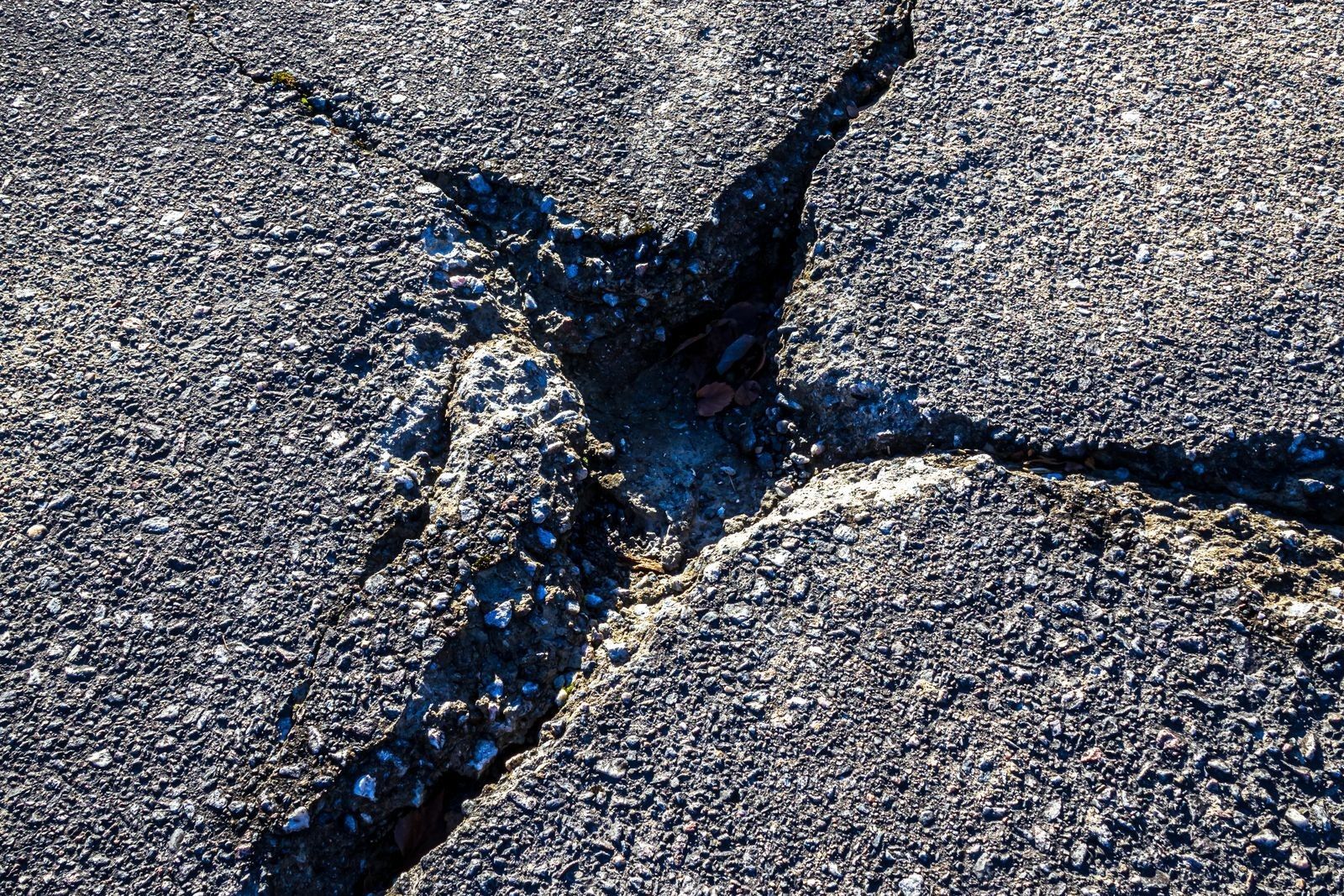
Widened crack in faded asphalt with loose aggregate along the broken edges
November 16, 2026
How long does asphalt last on a Western Slope lot or driveway? See industry planning ranges, what shortens or extends life, and how to read remaining pavement life.
Brown dormant turf with leftover snow patches after a winter melt
By Admin • November 12, 2026
Salt damage on lawns often shows up at walks and lot edges. See what it looks like, what to change this winter, and how to recover turf in spring.
Black and white view of an empty asphalt parking lot with crisp white stall lines and trees
By Admin • November 9, 2026
What does parking lot striping cost? See national per-stall and line-item ranges, what drives bids, and how to compare restripe and new layout quotes.
Clean asphalt parking stalls with fresh white striping on a dark commercial lot surface
By Admin • November 6, 2026
Learn what parking lot sweeping removes, when commercial lots need it, and how it fits asphalt maintenance before Western Colorado weather turns.
Mowed lawn and ornamental grass beds outside a stone-clad two-story building in evening light
By Admin • November 2, 2026
Rebidding grounds work? See what a landscape maintenance contract should spell out: mowing standards, irrigation repairs, extras, licensing and renewal.
Paving crew spreading fresh asphalt behind a paver in a commercial lot beside a warehouse
By Admin • October 29, 2026
What does it cost to pave a parking lot? See general national ranges per square foot, the scope that fits your lot, and how to compare paving bids.
Ice melt granules on a concrete entry walk near a control joint, glass entrance blurred behind
By Admin • October 26, 2026
Ice melt can speed up scaling on concrete walks and entries. Learn which deicers concrete groups warn about, why first winters matter, and how to limit wear.
Property manager in a winter coat holding a clipboard outdoors on a cold day to review snow bids
By Admin • October 26, 2026
Compare commercial snow removal pricing: per push, per event, seasonal, and hourly bids, fee modifiers, and how to budget a Western Colorado winter.
Show More