Artificial Turf vs Sod: Sod vs Artificial Turf Cost
By Admin • March 13, 2026

TL;DR
- Artificial turf vs sod is a total cost, drainage, and maintenance decision, not just an appearance choice.
- Sod vs artificial turf cost should be compared over time, not only upfront.
- Sod feels natural and stays cooler, but it requires watering, mowing, and ongoing lawn care.
- Artificial turf reduces mowing and can cut water use, but it costs more upfront and needs proper base prep and drainage.
- Pets, foot traffic, and problem zones often push the decision toward turf or a hybrid plan.
- Most failures in both options come from poor grading, drainage, and installation quality.
What’s Best for Properties in Montrose and Olathe, Colorado
If you are deciding between artificial turf vs sod for a home, rental, or commercial property in Montrose or Olathe, the real question is long term value. Sod vs artificial turf cost is not just the quote you receive for materials and installation.
It includes drainage and base preparation, irrigation needs, ongoing yard care, repair work, and how well the surface performs through heat, snow season, pets, and foot traffic. Below is a practical comparison so you can choose the option that fits your property and maintenance goals.

What sod and artificial turf actually are
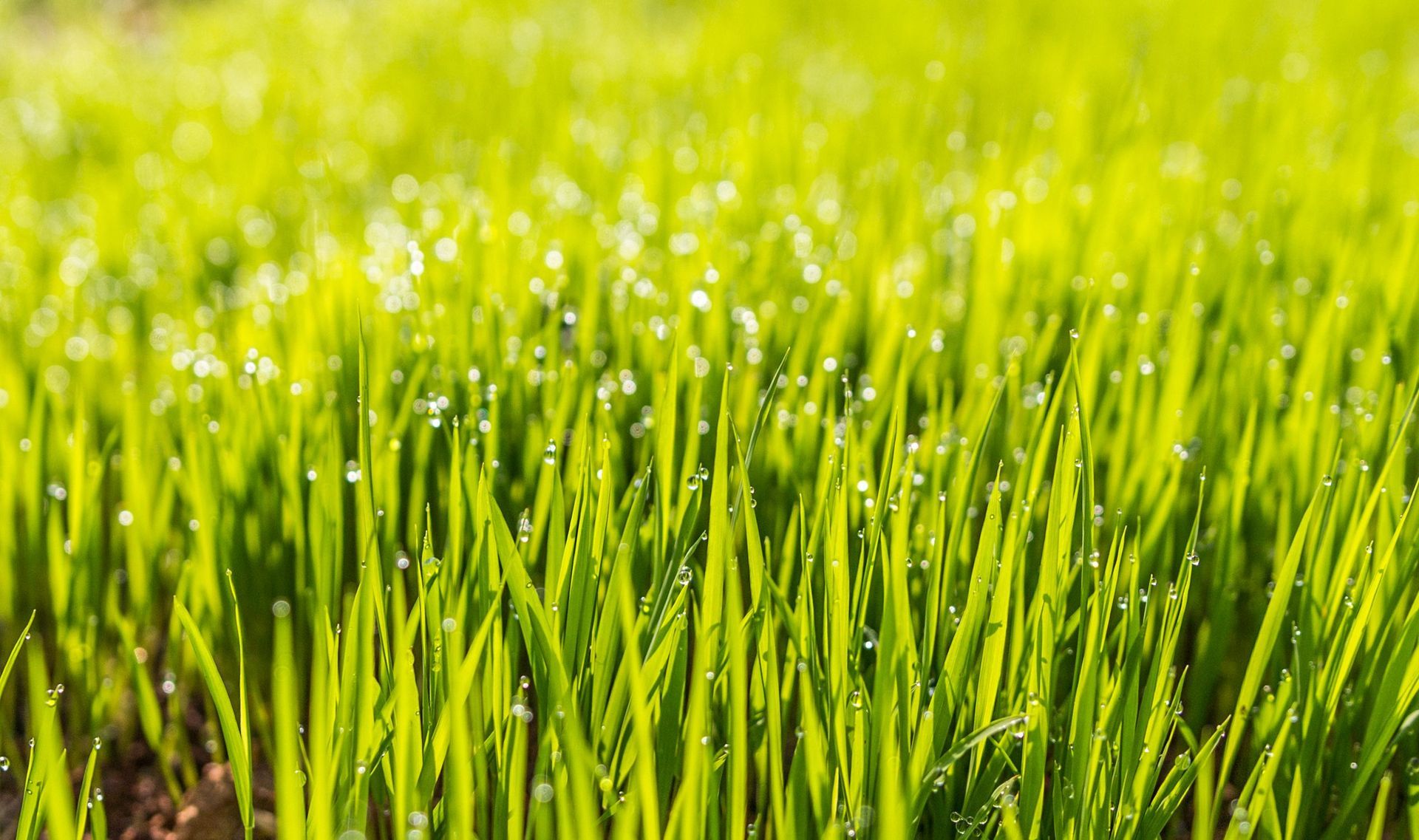
Sod is real grass that has been grown elsewhere and cut into rolls. When installed correctly, it provides instant green coverage. Because it is a living system, it needs proper soil preparation, consistent watering during establishment, and ongoing mowing and weed management to stay thick and healthy.
Artificial turf is a synthetic grass surface installed as a system. A quality installation usually includes excavation, a compacted base for stability and drainage, edging to hold shape, seams and fastening, and infill. Turf can look consistent year round, but it is less forgiving when the base and drainage are done poorly.
Sod vs artificial turf cost: what you are really paying for
The easiest mistake is comparing only upfront price. The better approach is comparing total cost of ownership over time.
Upfront cost
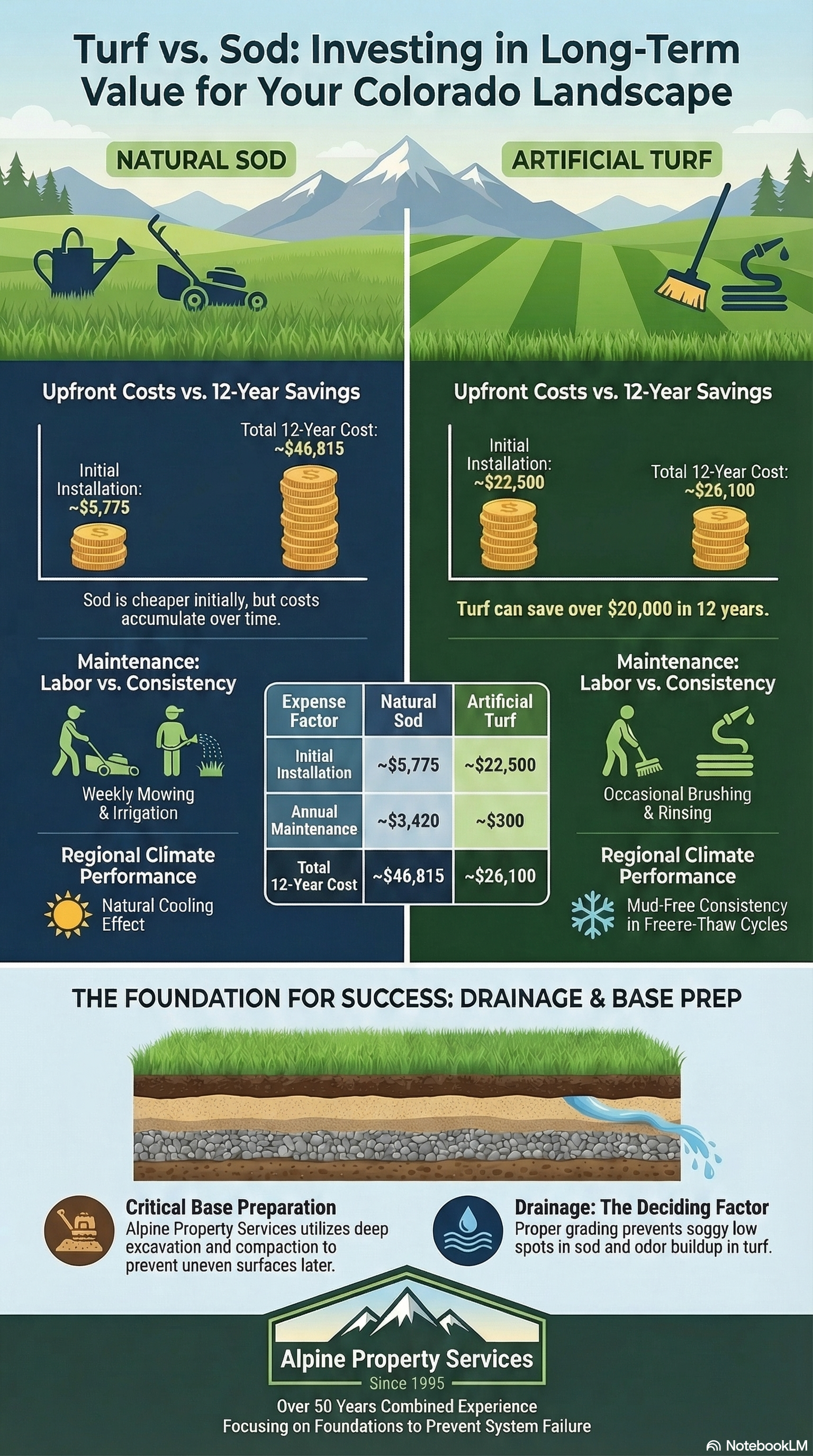
In most cases, sod is less expensive upfront. You pay for soil preparation, grading, the sod itself, and installation. Artificial turf is typically more expensive upfront because the base materials, labor, and finishing steps are more involved. The installation is closer to a hardscape process than a basic planting job.
A key point is that the cheapest option in either category often becomes the most expensive later. Shortcuts in grading, drainage, base depth, or soil preparation tend to show up after the first season.
Ongoing cost
Sod has ongoing costs that tend to be consistent: irrigation water, mowing, edging, fertilization, weed control, and repairs to thin areas. For many homeowners, these costs are acceptable because they already plan to maintain the lawn. For property managers, that weekly labor and water use can add up quickly across multiple properties.
Artificial turf typically has lower weekly labor because there is no mowing. However, turf is not maintenance free. It needs debris removal, occasional brushing to keep fibers upright, and periodic rinsing, especially in pet areas. Over time, some turf systems also need infill adjustment or topping.
Hidden costs that surprise people
Both sod and turf can fail if the foundation work is skipped. With sod, common hidden costs include reseeding and patch repair due to compacted soil, poor irrigation coverage, or soggy low spots that invite disease. With turf, common hidden costs come from drainage correction after installation, uneven surfaces from insufficient compaction, edge failure, or odor issues in pet zones when drainage and rinsing were not planned correctly.
Alpine Property Services has seen both systems underperform for the same reason: the surface was treated as the project, while the base and drainage were treated as an afterthought. When the foundation is done right, both options can perform well.
Performance in Montrose and Olathe conditions
Colorado’s seasonal swings make performance differences easier to notice.
Heat and sun exposure
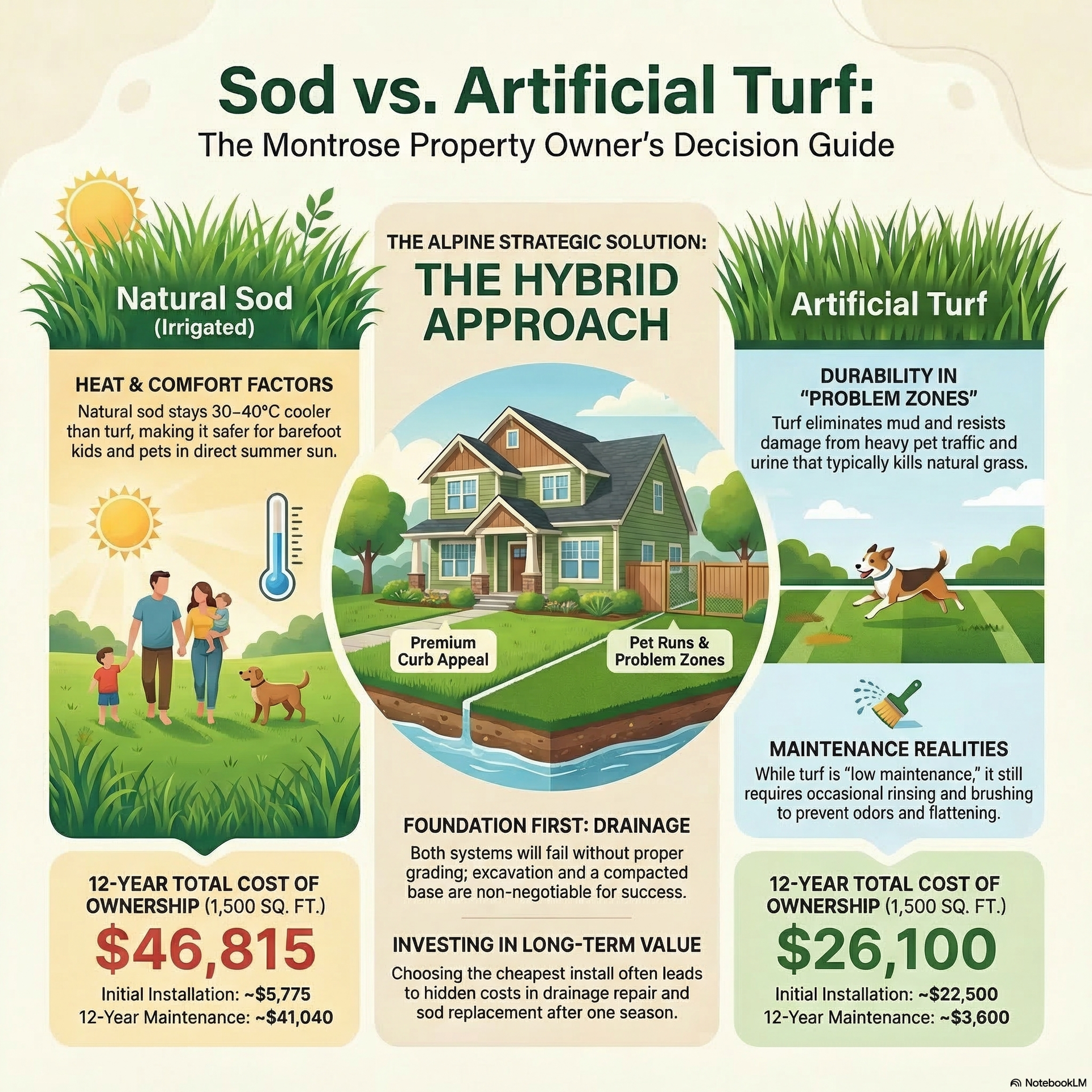
Sod can struggle in hot, full sun areas if irrigation coverage is inconsistent or mowing height is too short. Turf stays green, but it can heat up in direct sun and feel warmer than natural grass. That matters for properties with pets, kids, or barefoot traffic in summer.
Freeze, thaw, and snow cover
Sod goes dormant and then rebounds depending on weather and care. Turf does not go dormant, but freeze and thaw cycles can reveal base and drainage issues. If the base is thin or poorly compacted, you can see unevenness over time, especially in high traffic zones.
Drainage and muddy spots
Sod can become muddy in low areas, along downspouts, or anywhere that holds water. Turf can eliminate mud and keep surfaces usable, but only when the system is built to drain. Turf installed over poor grading can still pool water and become a frustration.
Pros and cons of sod
Sod is often the right choice when you want a natural feel and you are willing to maintain it consistently.
Advantages of sod
Sod feels natural, tends to stay cooler, and can be repaired by patching or reseeding. With good care, it can improve over time as soil health increases and roots establish.
Downsides of sod
Sod needs meaningful watering during establishment, and it requires mowing and ongoing lawn care. It can be vulnerable to weeds, disease, and traffic damage, especially in pet runs or play areas. If irrigation is inconsistent, the lawn often becomes patchy and thin.
Best use cases for sod
Sod tends to work best in visible frontage areas where natural curb appeal is important, and in lawns with moderate use and reliable irrigation.
Pros and cons of artificial turf
Artificial turf is often a strong option when consistency and reduced mowing matter most.
Advantages of artificial turf
Turf eliminates mowing and can reduce water use. It holds up well in high traffic zones and can be a practical solution for side yards, narrow strips, and pet areas where grass consistently fails. It also reduces mud in many properties when drainage is designed correctly.
Downsides of artificial turf
Turf has a higher upfront cost, can feel hotter in direct sun, and depends heavily on base preparation and drainage quality. It requires occasional maintenance such as brushing, debris removal, and rinsing. It also has a lifespan, meaning it may need replacement years down the road.
Best use cases for turf
Turf is usually a good fit for problem zones: side yards, pet runs, high traffic common areas, and strips that are hard to irrigate efficiently.
Pets, kids, and traffic: the real decision drivers
Usage patterns should guide the choice.
Pet zones are where sod often struggles the most. Repeated traffic and urine stress can destroy grass quickly. Turf can hold up better, but it should be installed with drainage and a cleaning plan so odor does not become an issue.
For kids and play areas, natural grass is often preferred for temperature and feel, but it may wear out in concentrated traffic zones. Turf provides consistency, but you should consider summer heat and how the area will be used during peak sun hours.
The deciding factor most people miss: grading, drainage, and base prep
If you remember one thing, remember this: drainage determines success for both options.
Sod needs loosened soil, correct grading, and irrigation coverage that matches the lawn shape. Without that, roots stay shallow, water runs off, and thin zones appear quickly.
Artificial turf needs excavation, proper base depth, compaction, and a drainage path so water moves through and away. Without that, turf can feel uneven, seams can fail, and water can pool.
When a yard has clear drainage problems, fixing grading and drainage first is often the best property improvement step, regardless of whether you choose sod or turf.
Which option is better for property managers
Property managers typically value predictability and reduced weekly labor. Turf can reduce mowing schedules and keep a consistent look between service visits. Sod can still be a great choice for premium frontage areas where natural feel matters most. In many cases, a hybrid plan works best: sod where it performs well and turf where grass consistently fails.
A simple way to choose
Start by identifying the problem zones that never stay healthy. Evaluate irrigation condition and water access. Then consider traffic, pets, and the role of the lawn in the property’s use. Finally, compare the total cost over a few years, not just the install quote. If you are unsure, phase it: convert the hardest zones first and keep sod where it thrives.
Conclusion
Choosing between artificial turf vs sod in Montrose and Olathe comes down to long term cost, maintenance expectations, and how the space is used. Sod vs artificial turf cost should be evaluated beyond the installation quote by considering water, weekly yard care, repairs, and seasonal performance. Sod can be ideal for natural feel and cooler comfort, but it requires consistent care and irrigation. Artificial turf can deliver a clean, predictable look with less mowing, but it demands correct base preparation, drainage, and occasional upkeep. For many properties, the best answer is not “all turf” or “all sod,” but a thoughtful hybrid plan that keeps real grass where it performs and uses turf where sod repeatedly fails.
Request A Callback Today!
Share your details and what you need—we’ll call you back by the next business day to schedule an estimate.
SHARE THIS