Alpine Tree Service: Tree Limbing What You Need to Know

Admin • May 20, 2026

Share this article

TL;DR

  • Tree limbing improves safety by removing low, hazardous, or overextended branches before wind and snow season stress them.
  • It protects roofs, gutters, vehicles, and walkways by increasing clearance and reducing branch rub and debris drop.
  • Proper limbing supports tree health when cuts are made at the branch collar and you avoid over-thinning or “topping.”
  • The best timing is often late winter through early spring, but storm damage and safety hazards should be handled immediately.
  • Costs depend on tree size, access, proximity to structures or lines, and how much cleanup and haul-off you want.
  • If you manage a property, proactive limbing reduces liability, improves sight lines, and keeps common areas cleaner year round.


Alpine Tree Service: Tree Limbing What You Need to Know in Montrose and Delta, Colorado


If you’re a homeowner or property manager in Montrose or Delta dealing with overgrown limbs, storm risk, or branches crowding structures, alpine tree service options like professional tree limbing can make your property safer and cleaner while supporting healthier tree growth. Tree limbing is not just cutting branches off the bottom. When it’s done correctly, you improve clearance, reduce breakage risk, protect buildings and vehicles, and make your landscaping and maintenance work easier to keep up with.


“A good limbing job removes risk without removing the tree’s ability to thrive. You want clean cuts, balanced structure, and enough canopy left to keep the tree healthy.”
— Guidance you will hear from an ISA-certified arborist

What tree limbing is, and how it differs from pruning and trimming


People use “limbing,” “trimming,” and “pruning” interchangeably, but the intent matters when you’re requesting a quote.


Tree limbing


Tree limbing usually means raising the canopy by removing lower branches to create clearance for:

  • Driveways and parking areas
  • Sidewalks and entryways
  • Mowing and maintenance access
  • Rooflines, fences, and gates


Pruning


Pruning is more health-focused and structure-focused. It often includes deadwood removal, correcting rubbing branches, reducing weight on weak unions, and shaping the tree for long-term strength.


Trimming


Trimming is often used as a catch-all word. Some people mean appearance shaping. Others mean clearance. When you call for service, be specific about what you need the tree to do

for the property.


If you already have routine exterior upkeep in place, you can align tree work with your overall property plan. For example, many property managers coordinate tree limbing with regular landscaping and seasonal cleanup so debris is handled efficiently.

Why tree limbing matters in Montrose and Delta


Tree limbing is one of those services you only notice when you skip it. The problems show up as hazards, mess, and expensive damage.


Safety and liability


Low limbs over sidewalks and parking areas can create head-level hazards. Dead or cracked limbs can drop without warning. If you manage a commercial property or rental, you are thinking about liability as much as aesthetics. Limbing is a straightforward way to reduce preventable risk.


Wind and snow load stress


Western Colorado weather can stress trees in two predictable ways:

  • Wind events that twist and break long, heavy limbs
  • Snow loading that adds weight, especially on weak branch unions

Reducing overextended limbs and removing compromised branches before winter can prevent emergency calls later. Property managers often schedule limbing before snow season, then transition into snow removal planning for access and safety.


Protecting roofs, gutters, fences, and vehicles


Branches rubbing a roofline can damage shingles and fascia. Overhanging limbs drop debris that clogs gutters and creates constant cleanup. Even if nothing breaks, you end up paying for maintenance you wouldn’t need if the canopy was cleared properly.


Better lighting and visibility


Trees can block exterior lighting, signage, and sight lines at driveways. Limbing can open the view without removing the tree, which is often the best outcome for curb appeal and safety.


Alpine Property Services has seen properties where a “landscaping problem” was actually a clearance problem. Once lower limbs were raised, mowing lines cleaned up, lighting improved, and the property looked more maintained even before any new planting or upgrades.


Signs you need tree limbing services


If you’re not sure whether it’s time, use these practical indicators.


Branches contacting structures


If branches touch your roof, siding, gutters, fence, or shed, you are already past the ideal time. Contact causes damage and creates pest pathways.


Low clearance over use areas


A good rule is simple: if you have to duck under branches to walk, mow, or park, your canopy is too low for the way the property is used.


Dead, cracked, split, or hanging limbs


Any limb with visible cracking, a split union, or deadwood should be evaluated quickly. Dead branches do not “come back.” They become falling hazards.


Debris drop that never stops


If you’re constantly dealing with twigs, leaves, seed pods, and branch litter in the same zones, the canopy may be too low and too dense over those areas. Limbing and selective thinning can reduce the mess significantly.


Trees crowding power lines


If limbs are near power lines, do not treat it as a DIY project. The right approach depends on the type of line and clearance requirements. In many cases, the utility has rules about who can perform that work.


The right way to limb a tree without harming it

A clean limbing job should reduce risk and improve function without stressing the tree into decline.

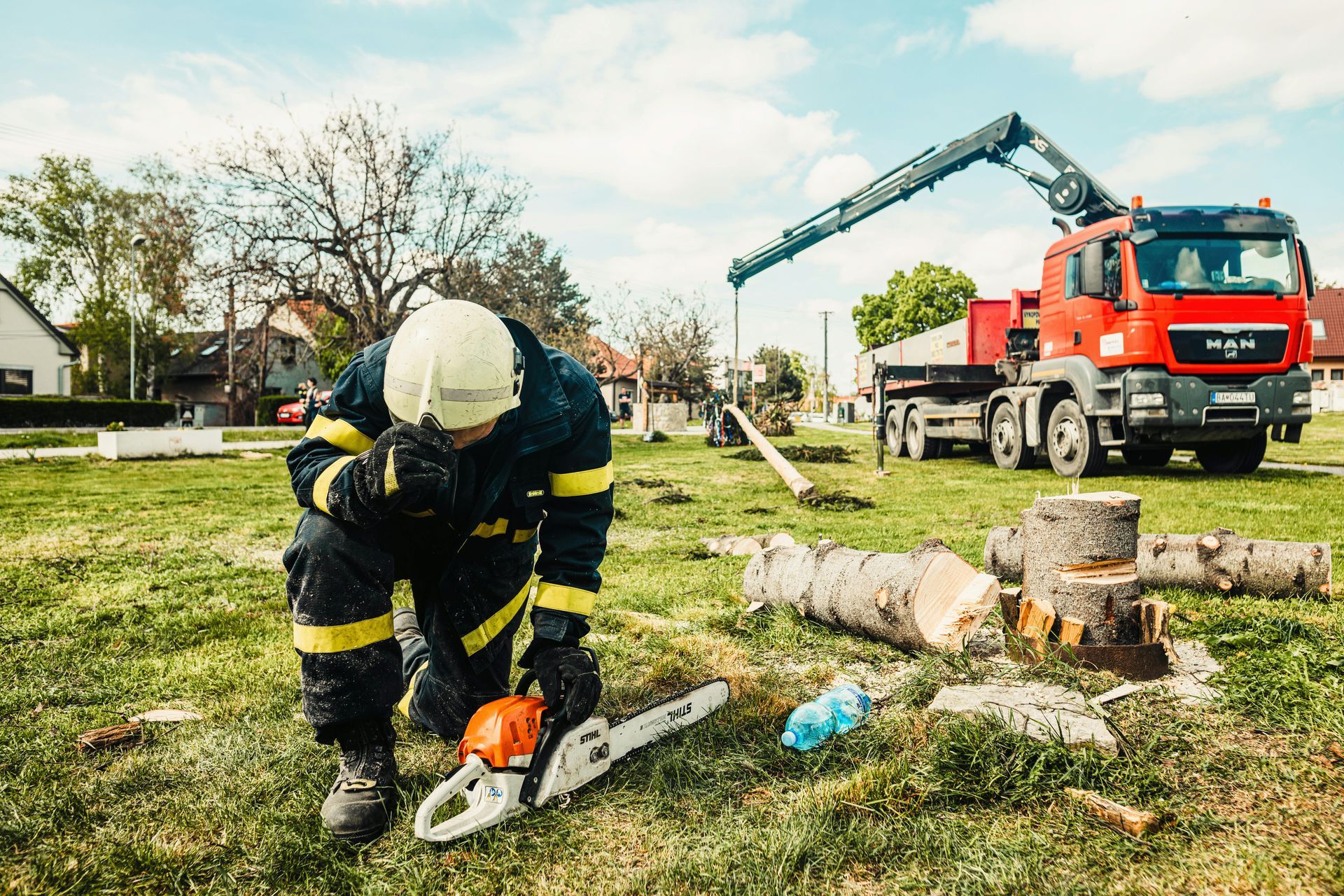
Firefighter using a chainsaw near fallen tree limbs beside a red truck with an extended crane arm

Set the right clearance targets


Clearance depends on use:

  • Sidewalks and walkways need pedestrian clearance
  • Driveways and parking areas need vehicle clearance
  • Lawn maintenance needs mower and equipment clearance

The best height is not a universal number. It’s based on how you actually use the space.


Make proper cuts at the branch collar


A correct cut preserves the branch collar, which is the tree’s natural “seal zone.” If you cut flush to the trunk or tear bark, you increase the chance of decay and poor wound response.


Avoid removing too much at once


Over-limbing is a common mistake. When you remove too much lower canopy in one visit, you stress the tree and risk sunscald on trunks that were previously shaded. A professional approach often phases work if the canopy needs significant correction.


Keep the tree balanced


Limbing should preserve balance. If you strip branches on one side, you can create uneven weight distribution, which increases failure risk in wind.


Avoid topping and lion tailing


Two practices are especially damaging:

  • Topping: cutting the main leader or large limbs back to stubs
  • Lion tailing: removing interior branches so foliage is only at the ends

Both create weak regrowth and increase breakage risk later.


Best time of year for tree limbing in Western Colorado


Timing is important, but safety is more important. If you have hazards, address them immediately.


Late winter to early spring


This is often a great window because:

  • The structure is easier to see without full foliage
  • Many trees recover well as they enter active growth
  • You can reduce risk before spring winds and summer storms


Summer


Summer limbing is possible, but you want to avoid heavy pruning during extreme heat. A lighter approach is often best, especially if the tree is already stressed.


Fall


Fall work can be useful for clearance and risk reduction heading into snow season. The key is not over-thinning right before winter weather.


Storm damage and emergency limbing


If a limb is cracked, hanging, or threatening a structure, timing becomes irrelevant. You handle the hazard first, then plan long-term corrections later.


Tree limbing for property managers and commercial properties


If you manage rentals, HOAs, or commercial sites, limbing impacts more than appearance.


Clearance for sidewalks, lots, and deliveries


Low limbs become operational issues when deliveries, dumpsters, or service vehicles can’t access areas cleanly. Clearance planning prevents damage and complaints.


Security sight lines and lighting


A trimmed canopy can improve visibility near entrances, signage, and lighting. That affects perception and safety.


Coordinating with maintenance schedules


Tree limbing often pairs well with:

The more coordinated your exterior plan is, the fewer “surprise” issues you deal with mid-season.


Tree limbing cost factors and what to expect in an estimate


Prices vary, but the drivers are predictable.


Tree size and complexity


A taller tree with heavy limbs and dense canopy takes longer and requires more equipment planning.


Access and obstacles


Fences, tight yards, steep grades, and landscaping features affect how safely crews can work and how debris can be removed.


Proximity to structures or lines


Working near roofs, vehicles, and utilities increases risk management and time.


Cleanup and haul-away


Some clients want everything hauled away. Others want chips left for mulch. Be clear up front so the quote matches expectations.


DIY vs professional tree limbing


If you’re dealing with small, low limbs you can reach safely from the ground with proper tools, limited DIY can be reasonable. But most limbing becomes risky quickly when ladders and saws are involved.


Why DIY becomes dangerous


  • Ladder instability on uneven ground
  • Branch swing and unexpected weight shift
  • Improper cuts that tear bark or trap your saw
  • Unpredictable fall paths near structures

When in doubt, treat limbing like any other safety service. You’re paying to reduce risk, not create it.


How to choose the right alpine tree service company


The best indicator of a quality provider is a clear process and a clear scope.


What to look for


  • Written scope that specifies limbing versus pruning versus deadwood removal
  • Proof they protect structures and clean up properly
  • Communication around scheduling and access
  • Proper insurance and safety practices

If you’re already working on broader exterior needs, it can help to align tree work with related services such as irrigation support or turf and weed programs. That keeps the property looking consistent, not patched together.


Next step


If you’re seeing low clearance, overhang on structures, or dead limbs, the best move is a quick on-site assessment. You’ll get a clear plan for what should be removed now for safety and what can be phased for long-term tree health. Start by contacting Alpine Property Services through the Contact page or use the Request a Call Back form so you can schedule around your property’s needs and access requirements.
Recent Posts

Professional landscaping work in a residential yard
May 18, 2026
Should you hire a landscaping contractor? Learn how professional services improve property value, save time, and ensure expert results in Montrose, CO. Discover the benefits of professional property maintenance.
Professional yard cleanup service in Western Colorado landscape
May 13, 2026
Learn the top benefits of professional yard clean up services in Montrose and Delta, CO. Improve curb appeal, plant health, and property value with expert care.
Professional tractor performing field mowing services on a large property.
May 13, 2026
Learn why professional field mowing services are essential for fire prevention, weed control, and property maintenance in Montrose, Delta, and Olathe, CO.
A beautiful professionally installed water feature in a Montrose landscape.
May 4, 2026
Learn how to install a water feature that lasts 50+ years in Montrose, CO. Discover expert tips for durable landscaping and property improvement from APS.
Professional lawn care results showing neat mowing lines in a healthy green lawn.
April 27, 2026
Discover average lawn care prices in Montrose and Delta. Our guide covers landscaping costs, yard maintenance rates, and seasonal property improvement budgeting for homeowners and property managers.
Professional paving crew laying a fresh asphalt driveway for a residential property.
April 13, 2026
Discover the comprehensive guide to asphalt driveway cost in 2026. Learn about per-square-foot pricing, factors influencing installation expenses in Montrose and Delta, and how to maximize your property value.
Beautiful hardscape patio in Colorado sunset
April 9, 2026
Master hardscaping in Colorado. Explore paver patios, retaining walls, and durable materials for Montrose and Delta properties with this expert guide.
Professional landscaping contractors in Colorado working on a luxury residential property.
April 6, 2026
Discover how expert landscaping contractors in Colorado enhance property value through professional yard care, asphalt maintenance, and snow removal. Serving Montrose, Delta, and Ridgeway with 50 years of experience.
Professional lawn fertilizer service applying nutrients to a healthy green lawn.
March 30, 2026
Professional guide to lawn fertilizer service for homeowners and property managers in Montrose, CO. Learn about timing, nutrient balance, and property value.
A professional sprinkler irrigation system watering a lush green lawn.
March 23, 2026
Learn what it takes to install a professional sprinkler irrigation system, including costs, components, and professional tips for property owners in Colorado.
Show More